 Skip to content




Your First Fountain Pen Setup: How to Choose a Pen, Ink and Notebook That Work Together
It is tempting to spend the entire budget on the pen. The photographs are persuasive, the nib options sound exciting and the notebook at home seems perfectly adequate. Then the first page feathers, the cartridge does not fit or the ink bottle arrives without a way to fill the pen.
A fountain pen setup works as a small system. The pen controls how ink reaches the page, the ink brings its own flow and drying behaviour, and the paper decides how that liquid settles. A modest, well-matched combination can be more satisfying than an expensive pen paired with unsuitable supplies.
At Makoba, we recommend building the first setup around what you actually write. A student taking dense notes, a professional recording meetings and a journal writer using broad strokes may need different combinations. Here is how to buy the essentials with a clear purpose and leave the optional extras until they earn their place.
Key highlights
- Choose a writing purpose before choosing a model.
- Budget for the correct cartridge or converter, not only the pen.
- Start with one conventional fountain pen ink and a manageable notebook.
- Match nib width to handwriting and paper rather than price.
- Learn one combination before collecting several alternatives.
Begin with one ordinary writing task
Imagine tomorrow morning. Where will you use the pen? Perhaps you will write a page of study notes, a meeting agenda or a few lines before leaving for work. That scene tells you more about your requirements than a general request for the best fountain pen.
Small handwriting suggests paying attention to line width. Long sessions make grip and balance important. Frequent travel raises questions about carrying and replacement ink. A desk-based journal routine gives you more freedom over notebook size and bottled ink.
Choose one main task first. A pen can serve several purposes, but an introductory setup becomes easier when you know which one matters most. You can expand it after learning what you enjoy.
Write down your non-negotiables
Perhaps you need cartridges, a clip or a lightweight body. Perhaps your workplace uses ordinary paper that you cannot replace. These are real requirements, not minor inconveniences to ignore because a pen looks appealing.
Keep the list short. Three clear priorities are more useful than a long collection of preferences borrowed from reviews. A pen that meets your own practical needs is a better purchase than one that wins a comparison designed around someone else's routine.
The pen: comfort before material prestige
Start with the section you hold. Is it comfortable without a tight grip? Does the nib meet the page naturally? Is the body balanced when you write a paragraph rather than a signature?
Plastic, resin and metal can all make suitable writing instruments. They change the weight and feel, but do not establish a universal hierarchy of comfort. A lighter pen may be a deliberate preference, not a compromise.
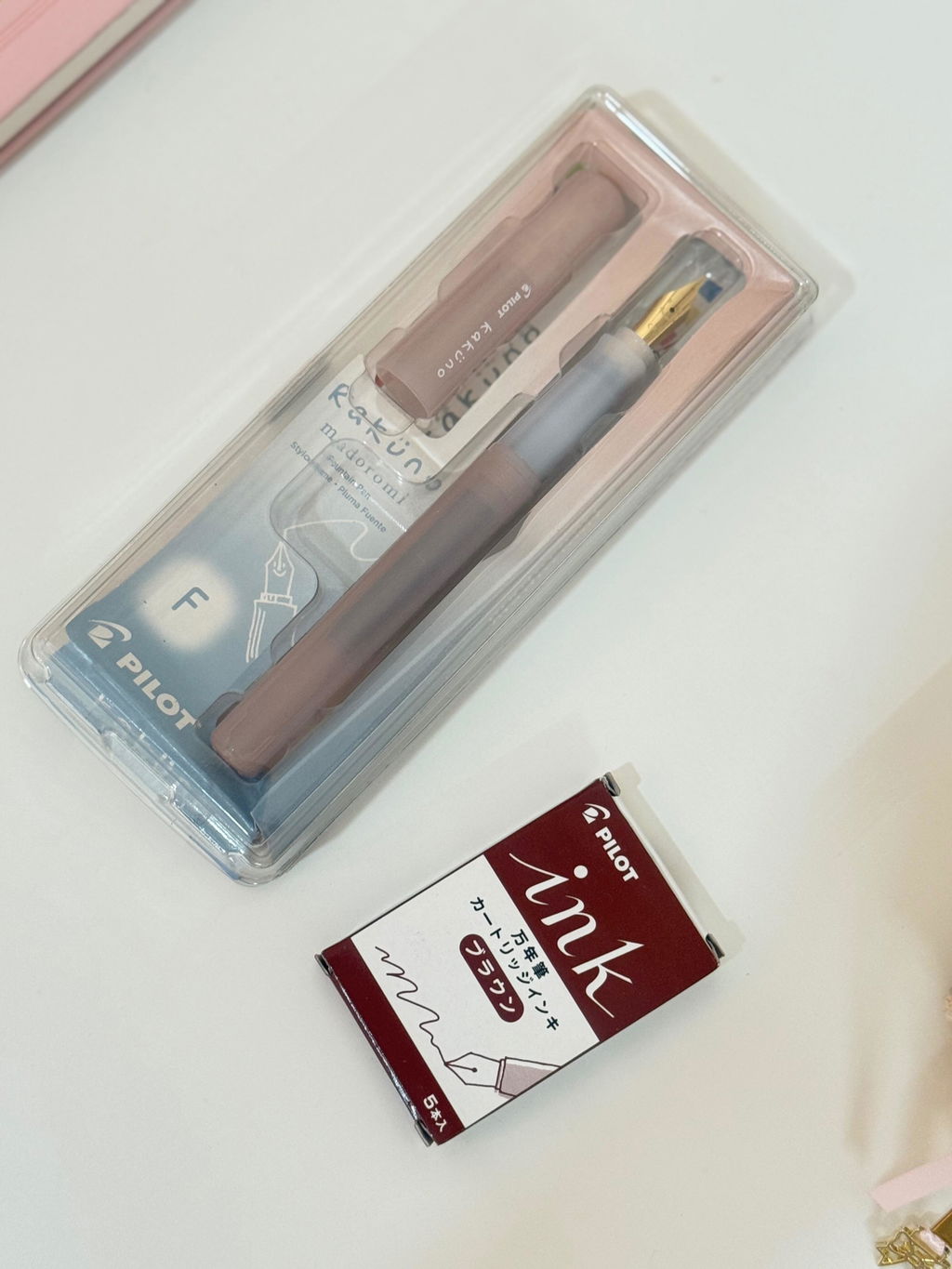
The Pilot Kakuno offers a lightweight direction. The LAMY Safari provides shaped grip surfaces. A Pilot Metropolitan offers a metal-body alternative. Treat these as different starting points rather than three steps on a compulsory ladder.
Try the cap routine too
A pen is handled as well as written with. Check whether the cap pulls off or unscrews, how you will store it while writing and whether posting it is appropriate. A convenient routine encourages regular use.
If you take many short notes, repeated uncapping matters. If you write a long journal entry, balance may matter more than the number of turns needed to open the pen. Your purpose determines which detail deserves attention.
The nib: choose around your handwriting
A finer nib can suit compact notes and narrow ruling. A broader line may be enjoyable for larger writing, headings and visible ink colour. Neither is more advanced simply because it produces a more dramatic page.
Brand labels are not identical measurements. A Fine from one manufacturer may write differently from another, and paper can widen the line further. Use a familiar pen as a reference when asking for advice.
Our nib selection guide explains the main options. For a first setup, choose a conventional width that supports your daily task. Specialist nibs can wait until you know what effect you want.
Steel is a sensible place to begin
A well-suited steel nib can provide a satisfying writing experience. Gold is not required to learn light pressure or enjoy ink on paper. Spending more on nib material will not automatically solve a grip or paper mismatch.
Put comfort, appropriate width and dependable supply ahead of a specification you do not yet need. If the setup encourages you to write regularly, it is doing the important work.
Decide between cartridges and bottled ink
Cartridges are convenient when you want a prefilled supply that is easy to carry. The main requirement is compatibility: the cartridge must fit the pen's connection and barrel, not merely look similar.
A converter is a reusable filling device for a compatible cartridge/converter pen. It opens up bottled ink choices but adds a filling routine. A piston pen stores ink through its built-in mechanism and does not need a converter.
There is no requirement to begin with a bottle. A compatible cartridge can let you learn the pen first. If the range of bottled colours is part of what attracted you, confirm the correct filling equipment before ordering.
Check what is inside the box
One package may include a cartridge; another may include a converter or bottle. A set name is not enough to establish every accessory. Check the actual contents for the version being supplied.
For example, a Metropolitan and ink-bottle set can be worth considering, but the filling arrangement still needs confirming. A bottle is only useful if the pen can draw from it through an appropriate system.
Our cartridge compatibility guide helps you ask the right model-specific questions. This is one of the most valuable checks in a first purchase.
The ink: pick a colour you will actually use
Choose a conventional fountain pen ink for the first fill. A dependable blue, black or blue-black is practical for many routines, while another colour may make personal writing more enjoyable. The useful choice is one you will not hesitate to put on a page.
Do not buy solely for a dramatic swatch. A heavy application can show effects that are much quieter in ordinary handwriting. Start by asking whether you like the base colour and whether its practical behaviour suits your writing.
Browse our bottled fountain pen inks with those questions in mind. One carefully chosen bottle is enough to begin learning a pen. You can add different colours once you understand the cleaning routine.
Avoid an unnecessarily demanding first formula
Shimmer particles, strongly concentrated effects or specialist permanent formulas can require more thought about pen suitability and maintenance. They are interesting options, but not compulsory parts of a beginner setup.
Learn the pen's normal flow first. If you immediately introduce several unusual variables, a simple question such as “Why is this line dry?” becomes harder to answer.
Our shimmer, sheen and shading guide explains the differences when you are ready to explore. Enjoying colour does not require choosing the most complicated formula available.
The notebook: buy paper, not only a cover
A cover colour is easy to judge online. Paper behaviour is less obvious, yet it changes the result every time you write. Unsuitable paper can feather, show through strongly or let ink reach the other side.
Choose a notebook intended to work with your writing instrument, then consider size, ruling and binding. Our fountain pen friendly notebooks provide a useful place to start.
A notebook can be technically suitable and still wrong for your routine. If it is too large to carry, it may stay at home. If the ruling is too narrow for your handwriting, the page can feel cramped even when the ink behaves beautifully.

Paper weight is one clue, not the answer
GSM tells you the mass of paper per unit area. It does not fully describe the surface or absorption. A heavier sheet is not automatically better for fountain pens than a lighter sheet designed for them.
Look for information about the exact paper and use. Consider drying time, edge definition and whether you will write on both sides. A paper that shows ink effects well may take longer to dry than a more absorbent alternative.
Our paper science guide explains these differences. The aim is a useful page, not simply the largest GSM number within budget.
Ruled, dotted or plain?
Ruled paper gives an obvious baseline for paragraphs. It can suit study notes, meeting records and traditional journaling. Choose line spacing that matches your handwriting rather than assuming every ruled notebook feels the same.
Dotted paper offers quieter structure for lists, diagrams and flexible layouts. It is popular for bullet journaling because the dots help position headings and columns without imposing a full grid.
Plain paper provides freedom for sketches and mixed writing, but some users find it harder to keep lines level. Choose around your main task. A first setup does not become more creative merely because the page has no ruling.
Build one of three practical setups
Setup one: compact everyday notes
Start with a comfortable pen in an appropriate finer nib, compatible cartridges or a simple filling system, and a portable notebook. Use a conventional ink in a readable colour.
This setup suits someone who wants to use the pen throughout a normal day. The notebook should fit the bag you actually carry, and replacement ink should be easy to identify.
The priority is readiness. Avoid so many accessories that using the pen begins to feel like preparing equipment for a special activity.
Setup two: longer journal sessions
Choose the body you can hold comfortably for a page or more. Pair it with a notebook that opens conveniently and a colour you enjoy reading. A bottle-filled pen can make sense if filling at home is part of the routine.
You have more freedom over line width here, provided the ruling and drying behaviour suit you. A broader nib can be enjoyable, but it should remain compatible with your handwriting.
The notebook matters as much as the pen. A journal that lies awkwardly or feels unpleasant under your hand can discourage the habit even when the nib is excellent.
Setup three: office work with ordinary paper
Choose with the paper constraint in mind. A controlled ink delivery and suitable nib may help, but no combination guarantees perfect behaviour on every office sheet. Test the actual paper where possible.
Keep the colour appropriate for your workplace and assess drying before relying on quick page turns. For forms with particular requirements, follow those requirements rather than a general pen recommendation.
If you also enjoy journaling, you can use a different notebook for personal writing. One setup does not need to perform identically on every paper you encounter.
Where the TWSBI ECO fits
The TWSBI ECO Black offers a bottle-filled starting direction with a visible reservoir. It can suit someone who likes watching ink levels and is comfortable learning a piston mechanism.
That is a different ownership routine from inserting cartridges. Budget for a compatible bottled fountain pen ink and follow the manufacturer's filling instructions. You do not need an additional converter for the built-in piston system.
If you are considering moving higher in the range, our ECO versus Diamond 580 comparison explains what to assess. Start with the features you need rather than assuming an introductory setup must immediately include an upgrade.
Accessories that earn their place
A protective sleeve or case is useful if the pen travels in a bag. A soft cloth or suitable tissue helps keep filling tidy. Compatible spare cartridges or a correctly identified refill supply can prevent interruptions.
Beyond that, buy around a real need. A large pen organiser is unnecessary for one instrument. Specialist tools should not be required for ordinary first use. A bottle collection can grow later if you discover that colour experimentation is part of the pleasure.
Leave space in the budget for the notebook. It is the accessory most likely to change every page, yet it is often the one people buy with whatever money remains.
How to compare prices sensibly
Write a short list of what each option includes: pen, nib, cartridge or converter, ink and notebook. Compare the finished setup rather than placing one bare pen price beside another complete set.
Check live Indian listings for current pricing and availability. Old overseas reviews can help explain a product, but they should not be treated as a current quotation. Finishes and included accessories may differ.
If the budget is tight, remove optional extras first. Keep a comfortable pen, the correct ink supply and usable paper. Those are the parts that make the setup function.
A first-fill routine that keeps things simple
Prepare a stable surface, read the model's instructions and fill with one ink. Keep the bottle away from electronics and loose documents. Clean the section after filling and let the feed become supplied as directed.
Write a reference page with the date, pen, nib, ink and notebook. This gives you a baseline. Over the next week, keep the combination stable so you can learn the feel before making changes.
Our first-time fountain pen guide explains the process in detail. You should be able to enjoy the first page without learning every filling system at once.
When the combination disappoints
If the line feathers, try suitable paper before blaming the pen. If the nib skips, check orientation, ink supply and pressure. If the grip feels uncomfortable, address that directly rather than changing ink repeatedly.
Change one variable at a time. A different notebook can reveal whether the paper was responsible. A conventional ink can help assess normal flow. A correctly seated cartridge can solve a supply problem without any adjustment to the nib.
If you need help, describe the whole setup. The pen model alone leaves out much of the evidence. Mention the nib, ink, paper and when the difficulty occurs.
Keep the setup enjoyable after the first week
Use it for a recurring task and cap the pen during breaks. Clean as directed before extended storage or an appropriate ink change. Keep bottles closed and the pen protected during travel.
Our cleaning guide covers the ordinary routine. Maintenance should support writing rather than become the main activity unless you deliberately enjoy that side of the hobby.
After a few weeks, decide what is missing. Perhaps nothing is. Perhaps you want a second colour or a smaller notebook. Let experience identify the next purchase instead of assuming a complete setup must keep growing.
A shopping worksheet you can use before ordering
Write one sentence describing the main use: compact meeting notes, daily journal pages or study writing on prescribed paper. Under it, record your preferred line size, whether you need a clip and how the notebook will travel. This is enough to make the initial conversation specific.
Next, list the parts needed for the chosen system. For a cartridge pen, identify the compatible cartridge. For bottled ink, identify the appropriate converter or built-in mechanism. Record the notebook size and ruling. Leave optional accessories below a separate line so they do not quietly consume the essentials budget.
Finally, check the actual product contents. If a set includes a bottle, find out whether the filling device is included. If a converter is supplied, confirm its reference rather than buying another one automatically. This worksheet is a way to avoid duplication, not a reason to make a small purchase feel complicated.
How to assess the setup after ten days
Look at the pages you genuinely wrote, not only the first careful sample. Are the notes easy to read? Did you carry the notebook? Does your hand remain relaxed? Is filling convenient enough that you are willing to do it again?
If the setup works, resist changing several parts just because more options exist. Familiarity is useful. It helps you recognise the effect of a future change and makes the pen feel like an ordinary companion rather than an ongoing experiment.
If something does not work, name it precisely. A notebook that is too thick for your bag needs a different response from paper that feathers. A nib too wide for your writing needs a different response from a grip that feels narrow. The diagnosis points towards a useful change and keeps the next purchase from being a guess.
Buying the setup as a gift
Choose around the recipient's habits rather than your own interest in the hobby. Someone who loves colourful journals may welcome a bottle and a suitable converter. Someone who takes practical notes may prefer compatible cartridges and clear instructions.
Keep the first-use experience understandable. Include the pen's instructions and identify the ink supply. If the gift contains a notebook, check that its paper supports the intended instrument. A coherent, modest set can feel more thoughtful than a larger box whose parts do not work together.
Where preferences are unknown, ask us to help narrow the options before choosing a specialist nib or demanding formula. The gift should give the recipient a pleasant reason to begin writing, not a list of technical problems to solve before the first page.
Our verdict: buy a combination you understand
The best first fountain pen setup has a clear purpose. You know why the grip suits you, how the pen takes ink and why the notebook belongs with it. That understanding makes the purchase easier to use and easier to improve later.
At Makoba, tell us your budget, handwriting size, main task and usual paper. We can help compare the available options and identify compatible essentials. You do not need an elaborate collection to start; you need a few well-chosen pieces that work together when you sit down to write.
Frequently asked questions
Do I need bottled ink on day one?
Only if the chosen pen requires it or you prefer that routine. A compatible cartridge is a convenient alternative in a cartridge/converter pen.
Can an expensive pen fix poor paper?
Not automatically. Paper, ink and nib interact. Buying a suitable notebook can be a more effective change than increasing the pen budget.
Should I buy a cleaning kit immediately?
Follow the requirements of the actual pen and ink. Ordinary gentle care is usually the first skill to learn; specialist products should answer a specific need.
What should I upgrade first?
Identify the problem before upgrading. Improve paper for feathering, reconsider grip for discomfort and review nib width for cramped writing. The next purchase should solve something you have actually noticed.


Leave a comment