 Skip to content




TWSBI ECO vs Diamond 580: Is the Upgrade Worth It for Your Writing?
The TWSBI ECO has already answered the question of whether you enjoy a bottle-filled demonstrator pen. You like seeing the ink, the piston routine feels familiar, and the pen has become part of your day. Then the Diamond 580 catches your attention, and the question changes: what would the extra spend actually add?
For a first-time buyer, the same comparison starts earlier. Should you choose the ECO and keep the rest of the budget for ink and paper, or begin with the 580? Both are piston-filled fountain pens with visible reservoirs and steel nib options, so the answer needs more detail than calling one basic and the other premium.
At Makoba, we would compare the exact versions, grip, nib arrangement, and ownership routine. This guide explains the practical differences and helps you decide whether the 580 solves something you care about or simply looks appealing beside a pen you already enjoy.
Key highlights
- Both families offer built-in piston filling and visible ink storage.
- The 580's faceted barrel gives it a different appearance and feel.
- The 580 has a dedicated replaceable nib-unit system; do not assume ECO parts are interchangeable.
- Standard, AL, ALR and decorative versions need separate specification checks.
- A preferred nib, comfortable grip, and suitable paper matter more than moving up a range automatically.

The quick answer
Choose the ECO if you want a straightforward route into a piston-filled demonstrator and its available nib and grip suit you. It can be a complete everyday writing choice, not merely a temporary step before another pen.
Choose the Diamond 580 if you value its faceted design, prefer its handling and want the intended 580 nib-unit arrangement. Those are concrete reasons to consider it, especially if they fit how you maintain and use your pens.
If your ECO already feels excellent, an upgrade is optional. A different ink, suitable notebook or simply more time writing may give you more pleasure than buying a second body with a similar role.
Compare the versions before comparing prices
ECO is a model family with different finishes, and ECO-T should not be casually treated as identical in every handling detail. The Diamond 580 range also includes variations such as AL, ALR and decorative trim versions.
Material and grip changes can affect feel and price. A special finish may cost more without changing the basic writing purpose in the way you expect. Record the full product name when comparing two listings.
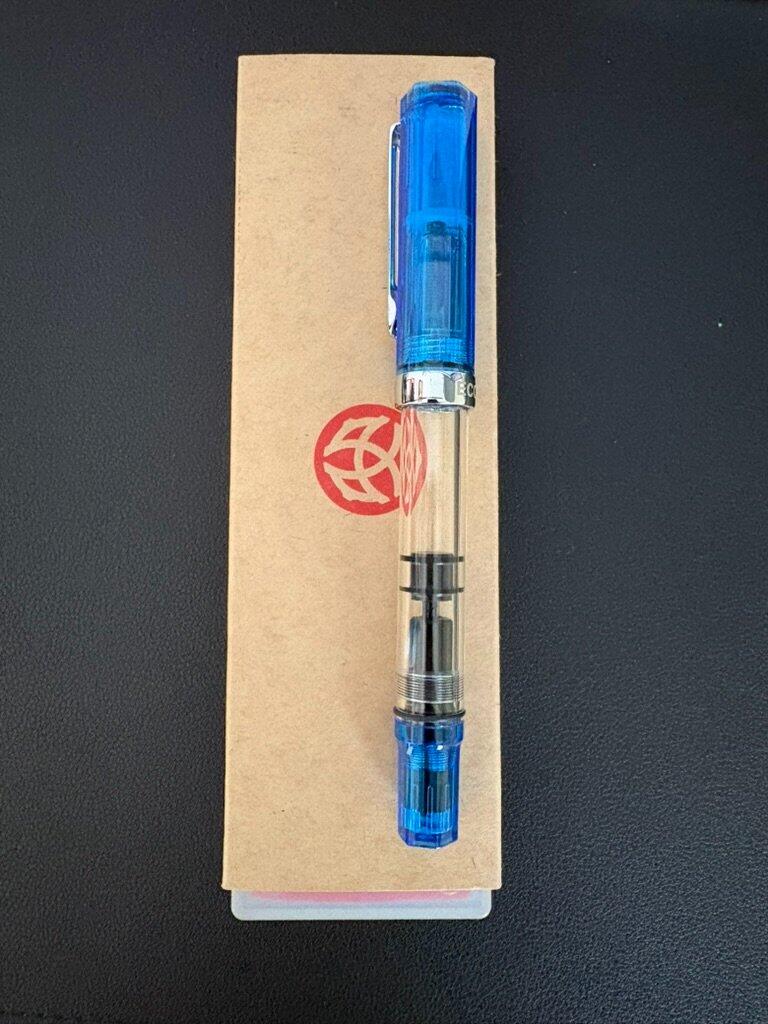
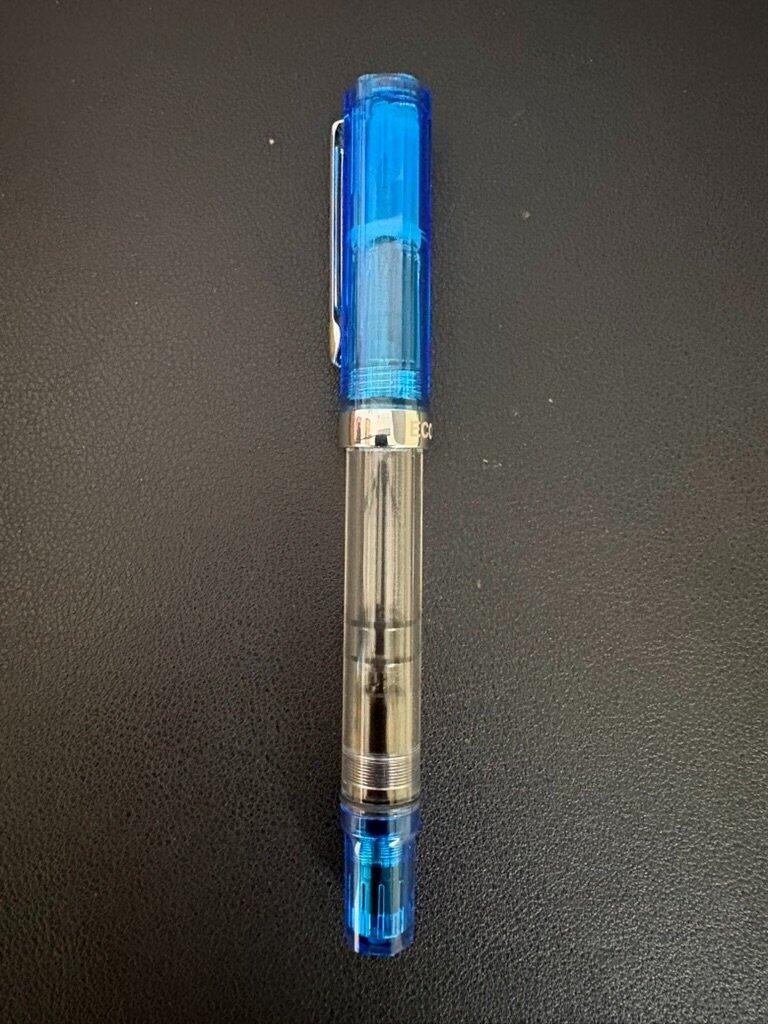
For a clear starting reference, look at our ECO Black and Diamond 580 Clear. Use the exact variants rather than a mixture of photographs and specifications from several editions.
What they share
Both use a built-in piston mechanism to draw bottled fountain pen ink into the reservoir. Neither requires a separate converter for normal filling, and neither takes an ordinary ink cartridge as its standard supply.
Both make the remaining ink visible through the body. That is useful for planning refills and enjoyable if the colour itself is part of your interest. A demonstrator turns ink monitoring into something you can see rather than estimate.
Both offer conventional steel-nib writing options within their ranges. The actual widths available depend on the product and stock. A comparison should therefore use the nib you intend to buy, not an unavailable configuration from an old review.
ECO: a complete everyday proposition
The ECO's appeal is direct. It provides a visible reservoir, piston filling and a recognisable shape without requiring you to begin at the higher end of the range. For many users, those are the features they wanted from a demonstrator.
That makes it a useful choice when the budget also needs to cover a bottle and notebook. A well-matched setup can be more satisfying than spending everything on the pen and using paper that obscures the result.
Do not interpret accessible positioning as a reason to replace it quickly. If the grip, line and routine suit you, the pen can remain a regular writer. An upgrade should answer a preference rather than a rule about how a collection ought to progress.
The visible reservoir is practical
You can check the ink level before leaving home or starting a long session. That reduces guesswork, especially when you use one colour regularly. The clarity of the view depends on the ink and finish, but the basic idea is useful.
A larger fill can also mean committing to one colour for a while. If you prefer changing inks frequently, filling to the maximum is not always necessary. Choose the amount around your routine and the manufacturer's normal operation.
Diamond 580: a different body and ownership option
The 580's faceted barrel changes the visual character. It can appeal to someone who enjoys the way light catches the demonstrator body or simply prefers its shape to the ECO's design.
The more important question is whether that body feels better in your hand. A visually attractive change is a valid reason to buy, but it should not be presented as proof of universally better writing.
The 580 also has a dedicated nib-unit system sold by TWSBI. That can be useful if changing between intended compatible units is part of your ownership plan. It is different from pulling components from an ECO and assuming they can be moved around safely.

Nib-unit flexibility is useful when you will use it
If you want to keep one body and use different appropriate nib units, the 580 system can be a meaningful feature. Follow the maker's compatibility and handling instructions for the exact version.
If you intend to buy one nib and leave it in place for years, the feature may matter less. It remains part of the product, but does not automatically justify the price difference for your particular use.
Separate the feature from the urge to dismantle. An intended replacement arrangement is not an invitation to mix unrelated parts or experiment without instructions.
Grip and balance: the most personal comparison
Look at where your fingers actually rest. The section's shape, surface and transition to the barrel affect comfort. A change that one user describes as refined may feel less natural to someone with another grip.
Write a paragraph if you can. Notice whether the pen encourages a relaxed hold or makes your fingers slide towards a less comfortable position. Repeat after a short pause to see whether your grip returns naturally.
Do not rely entirely on capped measurements or photographs. The writing balance depends on the uncapped pen, ink and how you hold it. What matters is the instrument in use, not only the object lined up on a desk.
Posting deserves separate attention
Posting places the cap on the rear while writing. Models can differ in their intended posting behaviour, and the cap can change balance or interact with the rear mechanism.
Follow the maker's guidance for the exact pen. Begin unposted when comparing and do not force a cap onto a place where it does not belong. A preference for posted writing can become a genuine selection requirement.
This detail is easy to overlook online. If your current habit depends on posting, mention it before choosing a new model so the recommendation addresses your real routine.
The nib: match width before judging the upgrade
A Fine ECO and a Broad 580 will not provide a fair comparison of the bodies. The line, ink consumption and paper feel can differ substantially because of the tip width alone.
Start with comparable available widths and similar ink. Even then, individual nib variation and flow can influence the result. A larger-looking nib should not be treated as a guarantee of greater smoothness or better handwriting.
Our nib selection guide explains how to choose around writing size. If the ECO's current nib is simply too broad for you, solve that specific problem instead of assuming every higher model will fix it.
Fine, Medium, Broad or Stub?
Finer options can suit compact notes. Medium and broader choices may appeal for larger writing or more visible ink colour. A Stub 1.1 option, where available, gives a different line shape and should be chosen intentionally.
A stub is not a flex nib. Its contrast comes from the writing edge and direction, not an instruction to press harder. It can be enjoyable for headings or expressive handwriting when the paper and letter size suit it.
Our fountain pen versus calligraphy guide explains that distinction. Choose the effect you want rather than the option that sounds most specialised.
Piston filling: similar category, learn the actual instructions
Both pens use piston filling, but you should still follow the instructions supplied with the model. Prepare the mechanism, immerse the appropriate part of the nib and feed, and operate it gently to draw ink.
Do not force the rear control past its intended travel. Keep the bottle stable and wipe the section appropriately after filling. A little preparation makes the process easier than trying to fill beside loose documents or electronics.
Our first-use fountain pen guide covers the general routine. The model's own instructions remain the reference for its controls and maintenance.
Capacity is useful only in context
It is easy to focus on how much ink a pen can hold. The practical question is how much you want to keep in one colour between cleaning or changes. A long-session writer and an enthusiastic colour-switcher have different priorities.
A visible piston reservoir can be useful in both cases, but the fill amount can be chosen around the routine. Do not assume a maximum fill is compulsory for every session.
Avoid comparing capacity claims without knowing how they were measured. For most buyers, the more useful distinction is whether the system supports their writing habit comfortably, rather than a small numerical advantage presented without context.
Cleaning and colour changes
Built-in reservoirs need an appropriate cleaning routine. A highly contrasting colour change can take patience to rinse, and some formulas demand more specific care. Choose the ink with the pen's guidance in mind.
You do not need to dismantle the piston every time you change colour. Follow the ordinary instructions first. Maintenance tools included with a pen should be used for their intended purpose, not because they make disassembly look like a required weekly activity.
Our cleaning guide explains the difference between routine care and unnecessary intervention. Predictable maintenance is part of a satisfying daily pen.
Which is better for your first piston pen?
The ECO is a strong starting direction if its grip and available nib suit you. It lets you learn bottle filling while leaving room for the rest of the setup. There is no need to apologise for choosing it as a complete everyday pen.
The 580 can also be a sensible first choice when its body and intended nib-unit system are features you already value. Starting higher is not inherently wrong; it should simply have a reason beyond avoiding a model described as entry level.
Think about how much you enjoy the mechanics. If you want the simplest introduction to fountain pens, a cartridge/converter option may also deserve consideration. The best first instrument is not automatically a piston pen at all.
Which is better for long writing sessions?
Choose the body that remains comfortable over a page, the nib that fits your handwriting and a paper that works with the ink. Both can offer the visible reservoir and bottle-filled routine that sustained writing users may appreciate.
Do not assume more weight or a higher price makes a pen better for longer sessions. Some writers prefer a lighter instrument; others like a more substantial feel. Grip position can matter as much as the total weight.
For journaling, pair the pen with a notebook that opens comfortably. Our fountain pen friendly notebooks can help complete the comparison. A cramped or absorbent page can overshadow differences between the two pens.
What if you already own an ECO?
Ask what you want to change. If the answer is the body shape, the 580 is worth trying. If it is the ability to use the intended replacement nib units, that is a concrete ownership reason.
If the answer is simply that the 580 looks beautiful, that is also a valid personal reason, provided it fits the budget. You do not need to invent a performance problem to justify enjoying another design.
However, if the ECO writes comfortably and the second pen would serve exactly the same task, consider whether another notebook or ink would add more variety. An upgrade is most satisfying when you understand what the change contributes.
Ink effects should not decide the body alone
Demonstrator pens make colourful ink attractive to look at, but a visible reservoir does not guarantee suitability for every formula. Check the pen and ink guidance, especially for particle-containing or specialist products.
For shading and sheen, paper and ink delivery can change the result as much as the model. A new body may not create the dramatic effect you saw in a photograph if the rest of the setup differs.
Our ink effects guide explains those variables. Choose a comfortable instrument first, then build an appropriate colour experience around it.
Price comparisons in India
Use current Indian product listings for the exact finish and nib. A decorative ECO version and a standard 580 may create a different comparison from two standard models. AL and ALR variants should be identified explicitly.
Do not use an old overseas review price as a current quotation. Packages, taxes, market versions and availability can differ. If a preferred nib is unavailable, decide whether waiting or choosing another model is the better option for your needs.
Keep the total setup budget visible. A bottle of suitable ink and a notebook belong in the plan if this is your first piston-filled fountain pen.
A practical decision table
| Your main priority | Starting recommendation |
|---|---|
| Learn piston filling with a complete everyday pen | Try the ECO in a suitable nib |
| Prefer the faceted 580 design | Compare the exact 580 body physically |
| Want the intended 580 replacement nib-unit system | Consider the compatible 580 configuration |
| Already love your ECO's writing | Upgrade only for a feature or design you value |
| Need one pen for dense notes | Prioritise line width and actual paper |
| Enjoy long journal sessions | Compare grip, unposted balance and notebook comfort |
The table narrows the conversation. It does not replace checking the exact product or turn a personal preference into a universal verdict.
Photos and finishes: check the selected version
Photographs can show different colours and decorative trims within a range. Use them to understand design details, then confirm which finish the selected product page and variant describe.
For example, our 580 Smoke Rosegold II illustrates a more decorative direction than the standard Clear. The trim choice should not be confused with a claim that it serves a different fundamental writing task.
If the exact finish matters for a gift, confirm it with the product reference before ordering. A similar model name is not enough to establish an identical appearance.
A fair side-by-side comparison
Use the same notebook and comparable ink where practical. Write a paragraph, a short list and a heading with each pen. Keep the nib widths as similar as available and note any difference rather than forgetting it during the verdict.
Then compare the body separately from the line. Which section feels more natural? Does either encourage a tighter grip? Can you see the ink level conveniently? Do you like the cap routine? These questions identify what the model change contributes without assigning every difference to price.
After a pause, return to each pen and begin another note. A daily writer needs to feel comfortable repeatedly, not only during one careful demonstration. If both work well, appearance and the intended nib-unit arrangement can become valid tie-breakers.
Two upgrade stories that lead to different answers
Suppose you use the ECO comfortably but want to alternate between suitable nib units on one body. The 580's intended system is relevant, provided the exact compatible parts and handling are understood. That is a feature-led reason to consider moving up.
Now suppose you like everything about the ECO except that your ink feathers on office paper. A 580 body alone may not solve that. Review the nib width, ink and actual sheet first. You may need a different combination rather than a different model family.
These examples show why naming the desired change matters. One problem points towards an ownership feature, while the other points towards the writing system. A recommendation becomes more useful when it addresses the cause rather than treating an upgrade as a general cure.
Choosing either model as a gift
Confirm that the recipient is comfortable with bottled ink or will receive a clear introduction. Add suitable ink and paper where appropriate, and make the nib choice deliberately. A visible reservoir can be engaging for a new user, but the filling routine still needs explaining.
For an existing TWSBI user, ask which model and nib they already own. A different width or finish may be welcome, while an exact duplicate may serve no new purpose unless requested. The better gift reflects the person's writing rather than assuming the higher model is always the more thoughtful one.
Our verdict: upgrade for a reason you can name
The ECO is a compelling everyday choice when you want piston filling, visible ink and an appropriate nib without moving higher simply for the sake of it. The Diamond 580 earns consideration through its design, handling and intended nib-unit arrangement.
At Makoba, tell us whether this is your first piston pen or a companion to an ECO you already use. Share the nib, ink and paper you prefer, and what you want the new pen to change. That makes the recommendation about your writing, rather than a rule that the next model must always be better.
Frequently asked questions
Do either of these pens need a converter?
No. The models compared use built-in piston filling with bottled fountain pen ink.
Does the 580 automatically write more smoothly?
Not as a universal claim. Nib width, individual tip, ink, paper and writing angle affect the experience. Compare the actual configuration.
Can I swap ECO and 580 parts?
Do not assume interchangeability. Use the maker's intended compatible parts and instructions rather than transferring components based on appearance.
Should every ECO owner upgrade?
No. Upgrade when the 580 adds a design or ownership feature you value. A comfortable ECO can remain a complete everyday writing choice.


Leave a comment