 Skip to content




Pilot Kakuno vs Metropolitan: Which Is the Better First Fountain Pen for You?
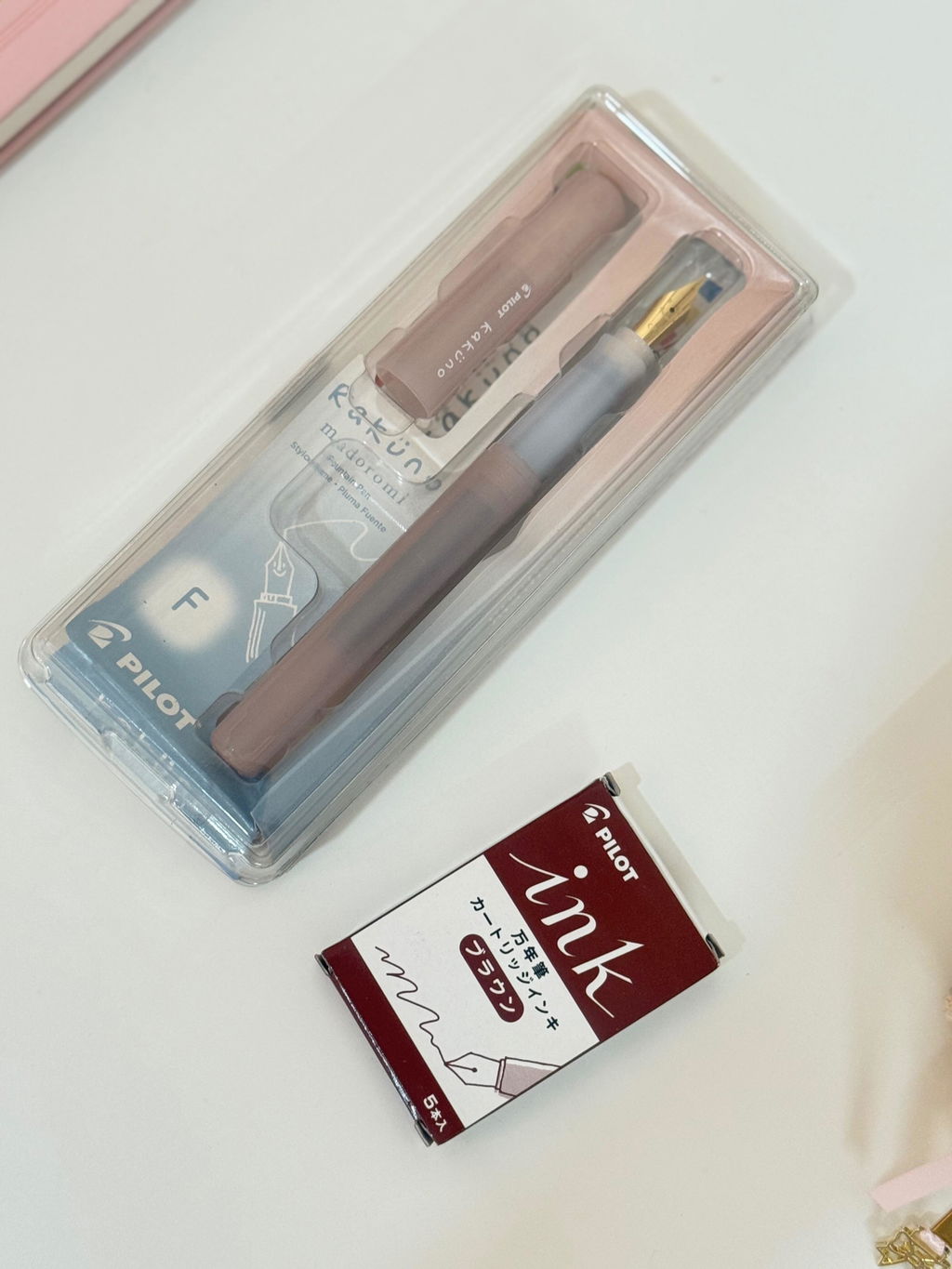
The Kakuno looks friendly. The Metropolitan looks ready for a meeting. Put them beside each other and the first reaction is often about appearance, even though the more useful differences are the ones your fingers will notice after a page of writing.
Both belong on a beginner's shortlist. Both offer a steel nib and a route into cartridge/converter fountain pen writing. Yet a first pen needs to do more than produce an attractive line. It needs to feel comfortable, make sense to fill and fit the places where you will actually use it.
At Makoba, we would choose between these Pilots by asking three questions: how do you hold a pen, how long do you write, and what do you want the pen to feel like in your hand? Here is how to turn those answers into a sensible purchase rather than choosing the more grown-up-looking barrel automatically.
The short answer
Choose the Kakuno if a lightweight body, visible nib-orientation cue and relaxed appearance appeal to you. Choose the Metropolitan if you prefer a metal body, a pocket clip and a more conventional professional appearance.
Neither recommendation means the Kakuno is only for children or the Metropolitan is an inevitable upgrade. An experienced writer may prefer a lightweight Kakuno for long notes. A complete beginner may find the Metropolitan a natural fit from the first page.
The right nib and ink supply remain important in either case. Check the exact version being sold, especially when comparing products from different markets or sets with different included accessories.
Key highlights
- Compare grip comfort before choosing by body material.
- The Kakuno's nib marking can help you notice unwanted rotation.
- The Metropolitan's metal construction changes the feel, not automatically the quality of handwriting.
- Nib labels and writing samples should be considered with ink and paper.
- Verify cartridge and converter compatibility for the exact regional version.

What the Kakuno gets right for a beginner
An unfamiliar writing instrument can make people grip too tightly. The Kakuno's approachable design reduces some of that ceremony. It looks like something you are allowed to learn with, rather than an object that must be reserved for an important signature.
Its lightweight plastic body is a practical advantage for people who dislike heavy pens. You can use a light grip without feeling that you need to support a substantial barrel. That may be helpful during longer passages, although comfort remains individual.
The smile-marked nib gives another useful cue. With the top facing upwards, you can see how the nib is oriented. If you rotate the pen while writing, the change becomes easier to notice. It is a simple teaching feature rather than a substitute for learning comfortable contact with the paper.
Appearance is a preference, not an age restriction
There is no reason an adult should avoid a Kakuno because the nib has a friendly face. A pen that makes you want to write has done something worthwhile. The important question is whether the body and grip suit your routine.
Equally, not every new user enjoys playful styling. If you want something that blends into formal office accessories, the Metropolitan may appeal more. You are allowed to care about appearance, provided it does not distract from comfort.
Our Pilot Kakuno Blue Gray listing is one catalogue example. Browse the available options and choose the actual nib and finish, rather than assuming every pictured colour is ready in every width.
What the Metropolitan brings to the choice
The Metropolitan takes a more traditional approach to a daily fountain pen. A metal body and pocket clip give it a familiar professional character. It can feel like a natural move from a conventional office pen for someone who wants to try a nib without changing the visual style of their desk.
That sense of substance can be enjoyable. Some writers prefer feeling a little weight in the instrument; others notice it during longer sessions. Weight is a handling characteristic, not a measure of how seriously a pen should be taken.
The section and the transition to the barrel deserve attention. Where your fingers sit determines whether that shape feels comfortable. Someone holding close to the tip may have a different impression from someone who rests their fingers farther back.
The clip makes a practical difference
If you carry a pen in a shirt pocket, notebook loop or organiser, a clip may matter more than a small cosmetic detail. It can help you place the pen consistently and find it quickly. The fit still needs checking: a thick pen may not suit every narrow loop.
A clip also changes the silhouette and can help prevent rolling when the pen is capped. It does not make loose carrying among keys a good idea. Protect the instrument regardless of which design you choose.
See the Pilot Metropolitan Black Gloss CT for a model reference. The catalogue also includes different finishes and sets, so compare the actual item rather than treating Metropolitan as one fixed package.
Compare like with like
| Consideration | Kakuno direction | Metropolitan direction |
|---|---|---|
| Body preference | Lightweight plastic | More substantial metal |
| Visual character | Relaxed and approachable | Conventional professional styling |
| Orientation help | Marked nib provides a visible cue | Learn orientation through the nib's top face |
| Carrying | Plan a suitable case or storage method | Pocket clip can be useful |
| Main fit question | Does the shaped grip suit your hold? | Does the section and barrel transition suit your fingers? |
The table describes buying priorities. It does not prove that one pen is more comfortable for every hand. If you can compare them physically, write more than a signature. A short paragraph will reveal much more about pressure and grip.
Are the nibs the same?
The pens share a family resemblance in their steel-nib writing approach, but it is unhelpful to promise that every unit will feel identical. Nib width, individual manufacturing variation, ink and paper all influence the line and contact sensation.
For a buyer, the useful comparison is between the specific widths available. A Fine Kakuno and a Medium Metropolitan are not a controlled test of the bodies. They may produce different line widths even before you consider flow or paper.
Avoid purchasing one solely because someone says it has the same nib as another pen. What you buy includes the grip, balance, cap and ink-supply arrangement. Those parts can change your experience substantially even when the writing tip feels familiar.
Fine or Medium for your first Pilot?
If you write small, use narrow ruling or fill compact forms, a finer line may be useful. If your handwriting is larger and you enjoy a more visible ink colour, a Medium may be worth considering.
These are starting points. A fine line on smooth paper can feel different from the same pen on absorbent office paper. Tell us the notebook and current pen you use when asking for advice; those details are more helpful than simply requesting the smoothest nib.
Our nib selection guide explains the wider choices. There is no need to choose an unusually broad or specialist nib to make your first purchase feel worthwhile.
Grip comfort is the deciding test
Hold each pen as naturally as possible. Notice whether your fingertips land on a comfortable surface or keep moving towards an edge. Then write a few lines without deliberately changing your usual handwriting.
If you tighten your hold to stabilise the pen, ask why. The body may feel slippery to you, the grip may be too narrow, or the unfamiliar nib may simply be making you cautious. Those are different issues with different answers.
Do not let a shaped grip force you into discomfort. It can guide some users well, but hand positions vary. Equally, do not assume a rounder-looking section must suit you better. The meaningful result is what your hand does while writing.
Try the pens unposted first
Posting means placing the cap on the back of the pen while writing. It changes the length and balance, so begin with the cap set safely aside. Then try posting only where the maker permits it and the cap fits without force.
Some writers enjoy the added length; others find it shifts weight backwards. With a lightweight body, that difference can be noticeable. Neither preference is wrong.
Do not judge a pen from photographs showing it posted. A presentation photograph may show the shape attractively without representing the way you will find it most comfortable to use.
Cartridges and converters: check the version
Both model names are associated with cartridge/converter writing, but regional products and included parts need checking. In particular, do not assume that every MR or Metropolitan sold anywhere uses the same cartridge standard or comes with the same converter.
Read the exact listing and ask about the supplied ink system. If a converter is included, identify its model. If one is sold separately, confirm it fits both the connection and available barrel space.
A cartridge can make the first week straightforward. A converter is useful when you want bottled colours. You can choose convenience first and explore bottled ink later; there is no obligation to buy every accessory on the same day.
A set can be convenient, but check what it contains
The catalogue includes a Metropolitan with an ink bottle. A set can be helpful when its contents match the way you intend to fill the pen.
However, an ink bottle does not by itself establish that every required accessory is included. Confirm the converter and other contents for the actual package. Also check that the pictured finish matches the selected variant, as photographs may illustrate a particular version within a wider range.
Our cartridge compatibility guide provides a useful model-first approach. It is better to ask once than try to make a nearly fitting component work.

Which is better for school or university?
For long handwritten notes, start with comfort and the paper used in your institution. A lightweight Kakuno can be appealing if you dislike heavier instruments. A Metropolitan may suit someone who likes a clipped metal pen and a more formal appearance.
Think about replacement ink during a busy day. Compatible spare cartridges may be convenient, while bottle filling can be done at home. Keep the pen protected in a case rather than loose in a bag with a ruler and keys.
If an examination or course specifies a writing format or ink colour, follow the actual rules. A fountain pen hobby recommendation should never override a requirement for a particular assessment.
Which is better for an office?
The Metropolitan's conventional styling may appeal to people who want a discreet professional accessory. Its clip can also suit an organiser or pocket. That makes it a useful direction, rather than a universal office winner.
The Kakuno remains perfectly usable for work if you enjoy it. A reliable pen that suits your grip is more valuable than a formal-looking pen you avoid using. Consider how often you uncap, how small you write and whether the office paper handles liquid ink well.
Neither pen automatically improves note-taking. The advantage comes when the instrument encourages you to write comfortably and consistently, whether you are recording action points or planning a difficult conversation.
Which is better for journaling?
Journaling gives you more control over paper than an office form does. Choose a notebook that works with the ink, then decide whether you prefer the Kakuno's lightness or the Metropolitan's substance.
Long sessions make grip comfort more important than a short demonstration suggests. A pen may feel excellent for ten words and less natural after a page. If you can, compare a passage rather than repeatedly signing your name.
Our fountain pen friendly notebooks offer a place to complete the setup. Choose a size and ruling you enjoy, because a notebook you carry is more useful than one that stays on a shelf.
Paper can distort the comparison
If the Kakuno is demonstrated on smooth paper and the Metropolitan on rough office paper, the result says little about the relative pens. Keep the paper and ink as similar as possible when assessing writing feel.
Absorbent paper can make a line wider and reduce colour variation. Textured paper can make contact more noticeable. Those changes are not automatically faults in the nib.
Before deciding that one pen is scratchier, check nib width, rotation and pressure. Our feedback versus scratchiness guide helps describe what you feel more accurately.
Start with an ink that lets you learn the pen
A conventional fountain pen ink is a sensible first choice. Choose a colour you will use regularly and keep it constant while learning the grip and filling routine. That gives you a baseline for later experiments.
If you change pen, ink and notebook together, it becomes difficult to understand which change caused a new result. That can be enjoyable once you know what you like, but confusing during the first week.
Browse our bottled inks when you are ready to explore. A comfortable steel-nib pen can provide plenty of pleasure without an expensive or elaborate ink collection.
The real first-purchase budget
Compare the complete setup, not just the pen price. You may need a converter, spare cartridges or a suitable notebook. A set may include useful items, but only if you understand its actual contents.
Check current prices and available variants on the live pages. Finishes, packages and nib choices can change the comparison. Avoid treating an old review's overseas price as the amount you should expect to pay in India.
If your budget is fixed, prioritise a comfortable pen and the correct ink supply. Decorative extras can wait. You will learn more from using one suitable combination than from dividing the budget among accessories you do not yet need.
Care and durability in everyday use
Both pens need sensible handling. Cap them during breaks, use suitable ink and protect them during transport. A metal body does not make a nib immune to a fall, and plastic construction does not mean careless handling is harmless.
Clean according to the maker's directions, particularly before extended storage or a significant ink change. Do not pull the nib and feed simply because they appear removable in an online demonstration.
For ordinary care, see our cleaning guide. Consistent gentle maintenance matters more than treating an introductory pen as disposable or a metal pen as indestructible.
Five questions that usually settle the choice
Do you prefer light or substantial pens? Does a shaped grip feel comfortable? Do you need a clip? Which available nib suits your handwriting? What ink supply is included with the exact version?
Answer those before deciding that one model is a beginner pen and the other is an upgrade. The distinction is less useful than it first appears. Different bodies can suit different routines at the same stage of a writing journey.
If the answers remain evenly balanced, choose the appearance you enjoy more. Personal preference is a valid tie-breaker after the practical requirements have been met.
Three buyers, three sensible decisions
The student who writes several pages each day
Suppose you take dense lecture notes and prefer a light pen. The Kakuno's low-weight direction may be appealing, but the decision should include whether its grip suits you and whether the available nib works on your usual paper. Keep a compatible spare supply and a protective case in the plan.
If the Metropolitan feels more comfortable despite its different construction, choose it. The example is meant to identify the relevant questions, not declare that students must use plastic pens. A real hand test can overturn an assumption based on material.
The professional who wants one clipped pen
Suppose your pen moves between an organiser and a shirt pocket, and most writing is brief. A Metropolitan shortlist makes sense because the clip and conventional appearance fit that picture. Check the section comfort and the actual regional filling system before ordering.
You might still choose a Kakuno if it feels better and you carry it in a case. The important point is to account for storage deliberately. A clip is useful when your routine uses one; it is less meaningful when the pen always lives in a desk tray.
The journal writer buying a first fountain pen
Suppose the main use is twenty quiet minutes at home. Formal appearance and pocket carrying may be unimportant. Compare grip, unposted balance and the line on your chosen notebook. The saved budget may be better spent on suitable paper than a body you do not prefer.
This buyer can make a strong choice in either direction. The pen that encourages another paragraph is serving the purpose. There is no requirement to make a casual-looking instrument more serious through a more expensive replacement.
A useful shopping note to send us
Tell us the pen you currently use comfortably, how small you write and whether the new instrument is mainly for work, study or journaling. Add whether you want cartridges or bottled ink and whether you need a clip. If a particular colour matters, list that separately from the required nib.
Those details allow us to compare actual available options. They also help distinguish a preference from a requirement: you may be flexible about finish but firm about line width. That flexibility can make a better match possible without treating an unavailable variant as the only correct first pen.
Our verdict
We would favour the Kakuno for a buyer who wants a light, approachable pen and appreciates its orientation cue. We would favour the Metropolitan for someone who enjoys a metal body, clip and traditional professional character.
For a gift, ask about the recipient's grip and writing habits if possible. For yourself, choose the instrument you can imagine using on an ordinary Tuesday, not just admiring when the box is opened.
At Makoba, tell us your current pen, notebook and preferred line width. We can help you compare the available versions and the ink supply each needs. A good first fountain pen should make the next page inviting, without requiring you to become a collector first.
Frequently asked questions
Is the Kakuno only for children?
No. Its approachable design can help beginners of different ages, and experienced users may also enjoy its lightweight construction. Comfort and preference matter more than an age label.
Does a metal body mean better writing?
No. It changes handling, appearance and weight. The nib, ink, paper and your grip determine the writing experience together.
Can I assume a converter is included?
No. Check the exact version or set. Included accessories can differ, and compatibility should be confirmed for the specific model being supplied.
Which should I choose for small handwriting?
Start by comparing the available finer nib options on suitable paper. Then choose the body that feels more comfortable. Small handwriting does not automatically favour one barrel design.


Leave a comment