 Skip to content




How Montegrappa Limited Editions Are Designed & Crafted
Montegrappa’s limited editions are more than luxury pens — they are tiny, wearable works of art that carry centuries of craftsmanship, storytelling, and technical precision inside a single barrel. In this comprehensive guide we’ll walk through the full lifecycle of a Montegrappa limited edition: inspiration and concept, materials and techniques, metalwork and lacquering, nib engineering and testing, finishing and authentication, packaging and presentation, and finally the collector mindset that fuels demand for these masterpieces.
This long-form piece is written for serious collectors, luxury buyers, and content editors who want an authoritative, SEO-rich guide to “how Montegrappa limited editions are designed and crafted.” Expect detailed process descriptions, examples of standout limited editions, buying and care advice, and why these pens sit at the intersection of art, engineering, and heritage. For reference and product details, Montegrappa maintains a catalogue of limited editions and product pages that document the collections and technical specs.
Table of contents
- Why Montegrappa limited editions matter
- From idea to sketch: the creative brief and concept stage
- Materials that make a limited edition (resins, precious metals, lacquer, rare woods, enamel)
- Traditional and modern techniques (lost-wax casting, engraving, enameling, urushi, raden)
- Nib engineering, tuning, and quality control
- Filling systems and internal engineering (piston, power filler, vacuum, cartridge/converter)
- Surface finishing, lacquering and colour work (including themed artistry)
- Numbering, certificates, and authentication — why provenance matters
- Iconic Montegrappa limited editions — a curated list and short notes
- Packaging, presentation, and the collector experience
- How to preserve and care for a limited edition Montegrappa pen
- Buying advice for collectors and investors
- Final thoughts: what makes a Montegrappa limited edition timeless
Why Montegrappa limited editions matter
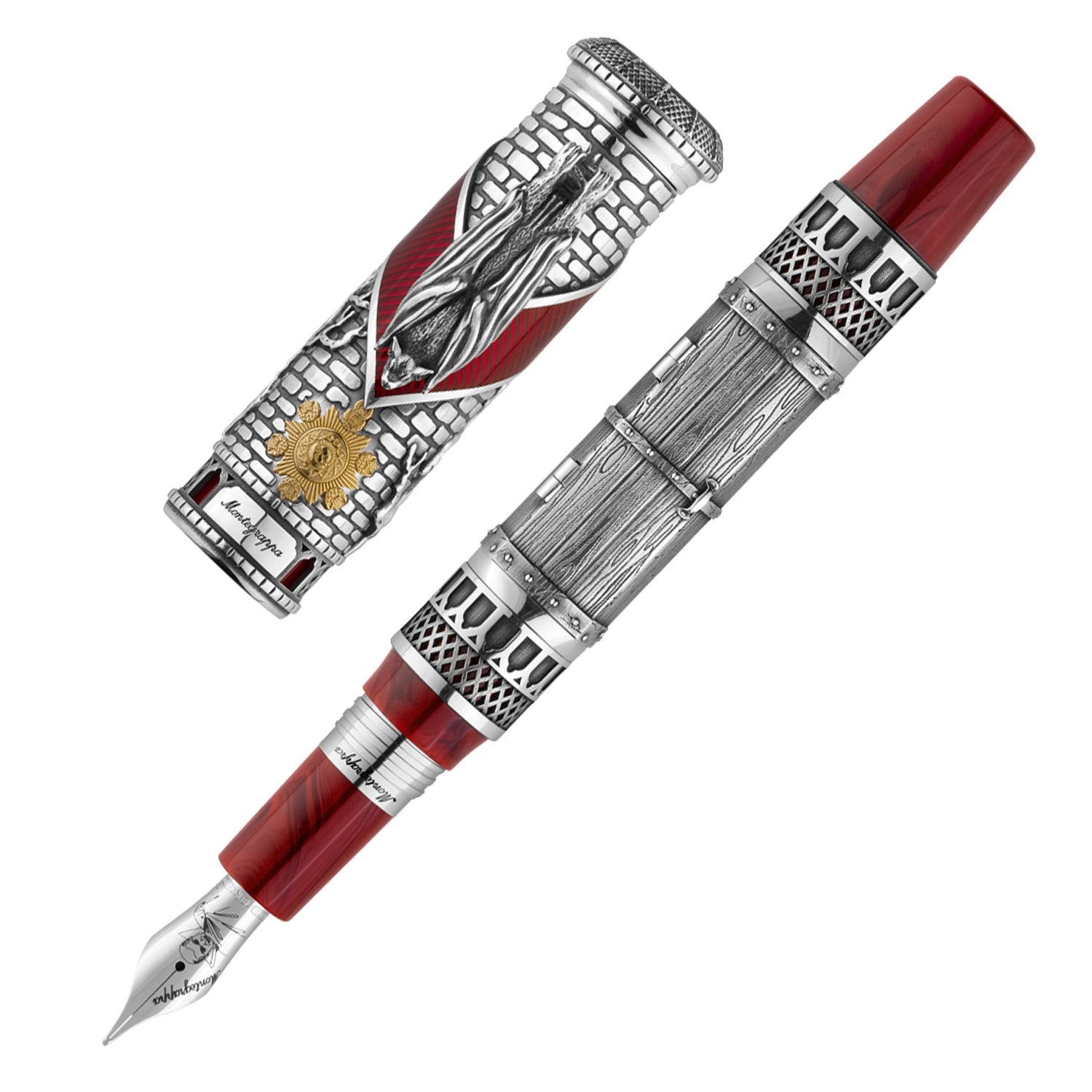
Montegrappa has turned storytelling into a structural practice. Its limited editions draw from cinema, literature, history, art, and pop culture to create pens that tell a story before you even unscrew the cap. These creations are not mass-market accessories — they’re deliberate expressions of craft that use advanced metalwork, rare materials, and vocal design cues to evoke emotion and collectability. The brand’s limited-edition catalogue demonstrates distinct design families — from licensed collaborations (film, music, comics) to high-art tributes and heritage commemoratives.
Collectors and high-end buyers appreciate Montegrappa for three reasons: narrative depth (each pen has a concept), craft depth (techniques and artisanal processes), and enduring material quality (metals, lacquers, and precious trims). The rest of this article breaks down how those three pillars become physical realities.
From idea to sketch: the creative brief and concept stage
Every Montegrappa limited edition begins with a story. That story may be based on a film (for example, a James Bond or Universal Monsters collaboration), a cultural artifact, an historical anniversary, or a creative collaboration with artists and foundations. The creative brief is written to answer core questions:
- What story will the pen tell?
- Who is the audience — a collector, fan, corporate patron, or museum?
- Which materials best express the narrative?
- What production constraints and edition size make the edition meaningful?
Design directors and concept artists sketch multiple pathways: silhouette sketches, motif placement, clip and cap design, and special mechanical features (hidden doors, themed finials, bespoke nib engraving). Those initial sketches are then evaluated for feasibility and translated into CAD models for precise engineering. For licensed projects (movies, foundations, artists), legal and brand-guideline reviews are critical before any crafting begins.
Materials that make a limited edition
The choice of materials is central to how the story reads in hand. Montegrappa uses a wide palette, and each material carries deliberate aesthetic and tactile meaning:
- Resins and celluloid: high-grade resins are used for vibrant colours, translucence, and marbling effects. Celluloid or pearlescent resins can emulate classic fountain-pen aesthetics while being stable for fine finishing.
- Precious metals (gold, silver, palladium, bronze): solid metal caps, overlays, or heavy trims provide heft and a luxe finish. Sterling silver (925) and vermeil are common for limited-edition overlays.
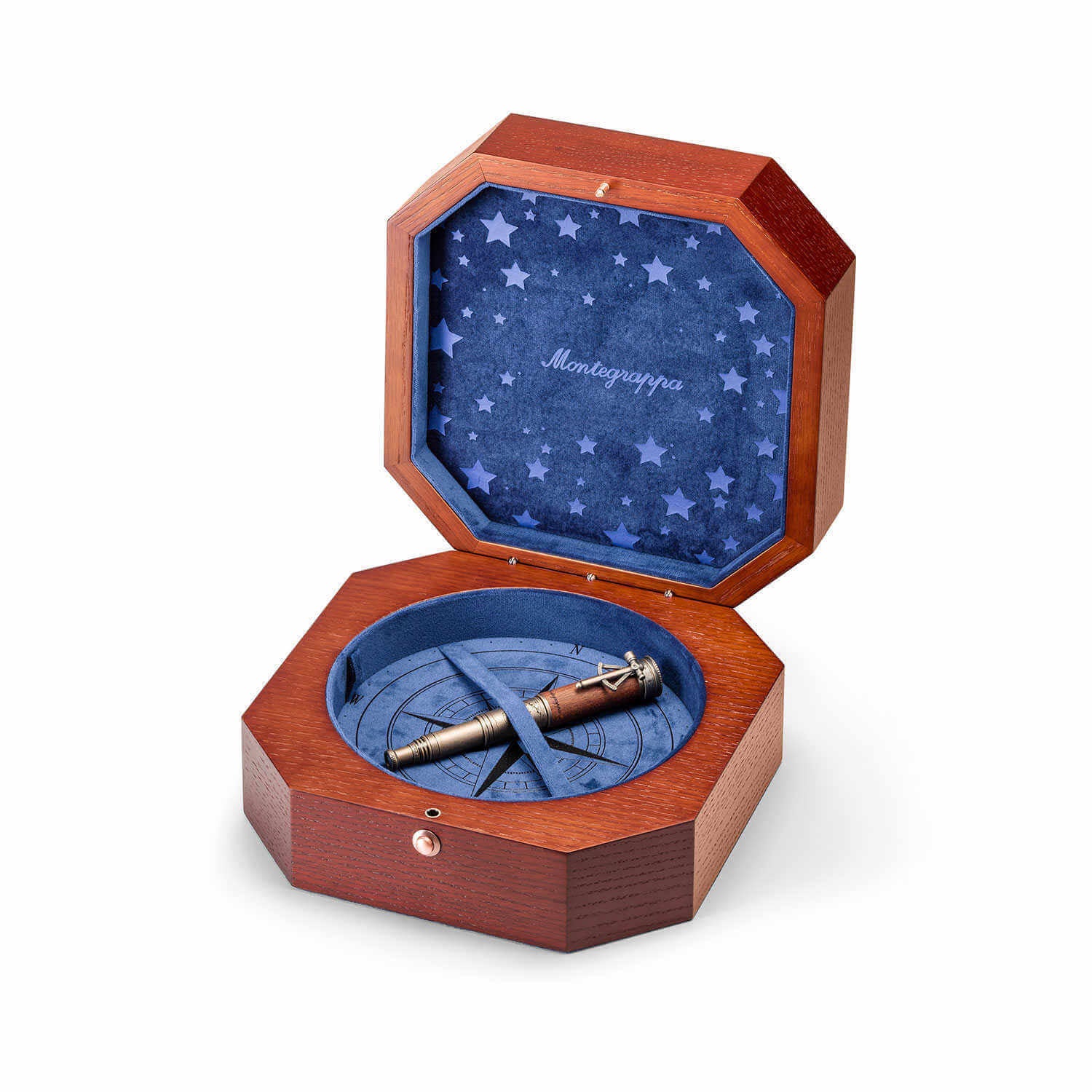
- Enamel and lacquer: hand-polished enamel and multi-layer lacquer (including techniques that mimic historic map finishes or patina) are used for high-gloss, depth and colour durability.
- Exotic woods and natural materials: snakewood, olive wood, and other rare timbers are used selectively to add warmth and natural patterning.

- Gemstones and inlays: semi-precious stones, mother-of-pearl (raden), and lacquer inlay work bring jewellery-grade accents.
- Sterling silver lost-wax cast elements: three-dimensional overlays, sculpted clips, and thematic finials are often produced by lost-wax casting in sterling silver and then hand-finished.
Material selection is not merely decorative — it determines the production pipeline, finish approach, and long-term maintenance instructions for the collector.
Traditional and modern techniques used in crafting
Montegrappa blends centuries-old techniques with modern workshop tools. Key methods include:
Lost-wax casting (cire perdue)
For ornate metal overlays and sculptural elements (clips shaped like movie iconography, miniature architectural elements, or figurative reliefs), Montegrappa uses lost-wax casting in precious metals. The process involves hand-carving a wax model, creating a mold, melting out the wax, and pouring molten silver or bronze. After casting, artisans file, chase, and hand-polish details to the required finish.
Engraving and hand-chasing
Fine engraving (both mechanical and hand-chased) adds depth — from micro patterning on the cap to detailed scenes around the barrel. Craftspeople use burs, gravers, and controlled rotary tools to achieve millimetre-level detail.
Enameling and lacquering
Enamel work (including cloisonné or champlevé in select pieces) is used to add permanent colour fields with a gemlike finish. Multi-layer lacquering gives pens a deep, three-dimensional sheen. In heritage collaborations, traditional lacquers may be used to reproduce period finishes.
Raden and mother-of-pearl
Raden (the Japanese technique of inlaying mother-of-pearl) and other inlay methods are used to create shimmering effects that catch light differently from each angle — a technique often reserved for high-tier, artisanal editions.
Guilloché and engine-turning
To create textured metal surfaces that refract light in controlled patterns, the guilloché lathe (engine-turning) provides fine, repeatable engraving patterns on metal surfaces.
Modern CNC & CAD prototyping
While much of the finishing is manual, Montegrappa uses CAD and CNC prototyping for precise mechanical interfaces (threads, internal reservoir geometry, and intricate clip pivot assemblies). This combination allows high fidelity between design concept and final assembly.
Nib engineering, tuning and quality control
A Montegrappa limited edition’s performance is tied to the nib — both in materials and in precision tuning.
Nib materials and custom engraving
Nib grades in limited editions typically include 14K or 18K gold, sometimes with bespoke plating or engravings that match the pen’s theme (e.g., film motif, anniversary year, or unique serial number). For special editions Montegrappa may commission custom-stamped logos or tiny pictorial engravings on the nib face.

Tuning to match the theme and function
Nib tuning is a craftsman’s art. Pens intended for expressive, flexible script may be tuned to a slightly softer touch; those intended for daily use are set for reliable, consistent flow with moderate feedback. Special nib shapes such as stub, architect, or italic might be offered in limited runs.

Flow testing and consistency checks
Each nib undergoes flow tests on multiple paper types. Technicians examine start-up behaviour, skipping, and dry starts, and make microscopic adjustments to slit width, tipping geometry, and tine alignment. A final writing sample is recorded before the pen leaves the workshop.
Filling systems and internal engineering
Montegrappa employs several filling systems depending on design goals:
- Cartridge / converter: flexible and familiar for many users; used in thematic pens where internal volume isn’t the primary concern.

- Piston filler: provides higher ink capacity and smooth, balanced weight distribution — preferred for robust daily writers.
- Power filler / vacuum: used when higher ink capacity or dramatic demonstrator aesthetics are required.
- Custom reservoirs & safety valves: some limited editions include travel-safe valves or specially shaped reservoirs to reinforce the thematic design (e.g., hidden chambers, tinted demonstrator sections).
Internal engineering also covers thread tolerances, cap liners, and pressure-relief designs to avoid leakage during temperature changes or travel.
Surface finishing, lacquering and colour work
After assembly and initial polishing, the surface treatment begins. This stage has an outsize effect on perceived luxury and narrative authenticity.
Multi-layer lacquer and polishing
High-end Montegrappa pens receive many lacquer layers—each hand-applied and buffed—so that colour appears deep and layered rather than surface-applied. The process can take weeks per batch as each layer must cure and be sanded to remove micro-imperfections.
Patination and controlled oxidation
For designs inspired by age or historical objects (maps, antique silver artefacts), controlled patination is applied to metal surfaces to create a time-worn look. This requires chemical skill and careful masking so only desired surfaces darken.
Precious metal plating and gilding
Gold and ruthenium plating is applied to trims where required, followed by final polishing. In some editions, selective plating is used to create two-tone contrast between clip, cap band, and finial.
Sculptural detail and miniature assemblies
Three-dimensional appliqués (miniature doors, architectural features, sculpted creatures, or film-icon motifs) are hand-assembled into the body, often requiring micro-screws and precision adhesives.
Numbering, certificates, and authentication — provenance matters
Limited editions are only as collectable as their documented provenance. Montegrappa enforces strict numbering and authentication protocols:
- Individual numbering: each pen in a limited run receives an engraved number (e.g., 23/500) on a discreet surface.
- Certificate of authenticity: accompanies the pen, detailing edition size, materials, serial number, and manufacturing details.
- Matching engraving & documentation: some editions include matching elements such as artist signatures, limited-edition booklets explaining the concept, or dedicated letterpress certificates signed by designers.
- UV and hidden markers: for extremely high-value pieces, hidden markers or micro-engraving help future authentication and prevent counterfeit duplication.
Provenance—packaging, paperwork, and serial matching—directly impacts secondary-market value.
Iconic Montegrappa limited editions — curated list and notes
Below is a curated list of some of Montegrappa’s most celebrated limited editions, chosen to illustrate design approaches and thematic breadth. (This list is illustrative, not exhaustive — Montegrappa’s catalogue includes numerous collaborative and heritage series.) Product pages and official collection overviews provide detailed specs and visuals.
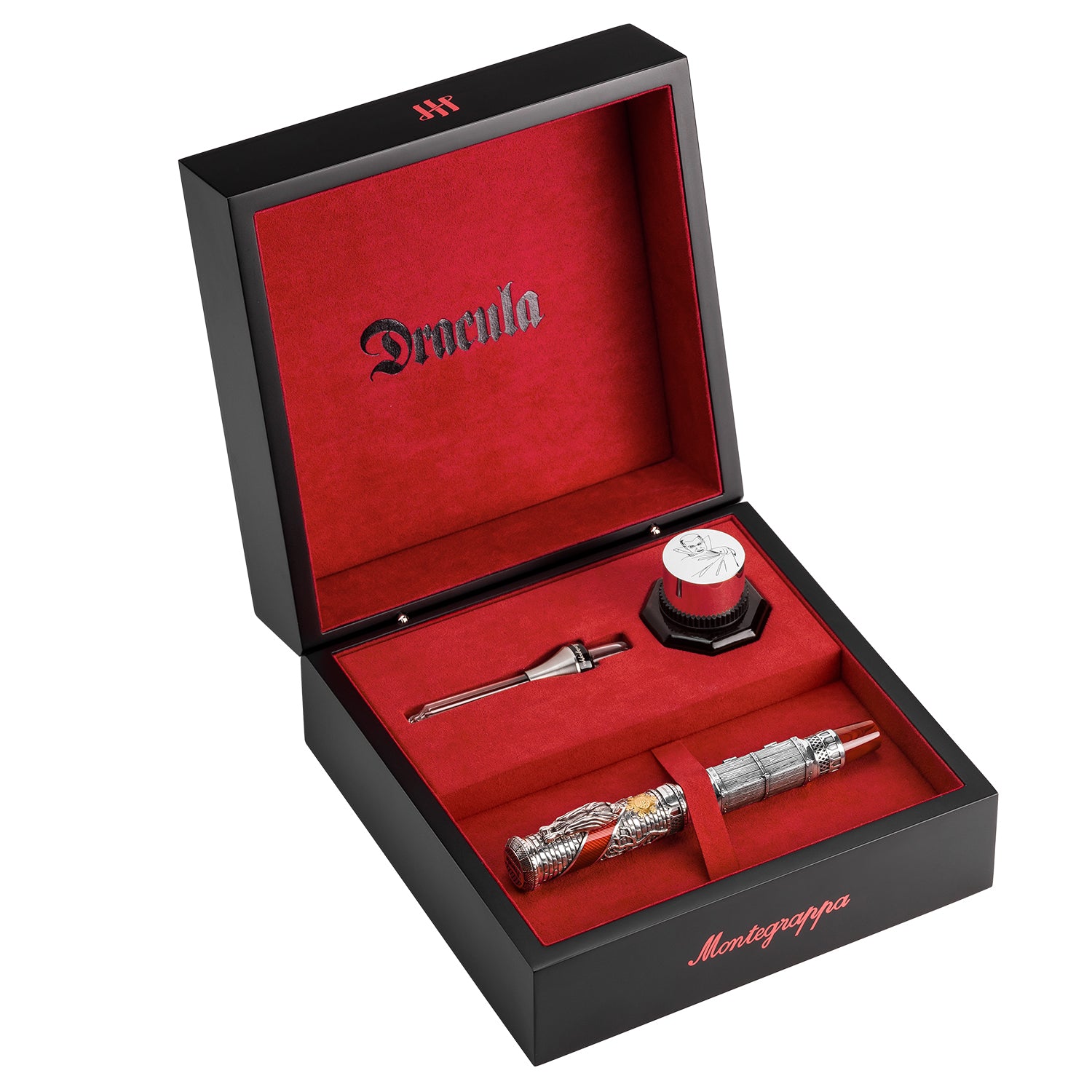
Universal Monsters: Dracula
A sculptural, gothic edition that uses sterling silver elements, crimson resins, and ornate lost-wax cast details to evoke classic horror iconography. The design often includes sculpted bat clips, coffin-styled caps, and thematic nib engravings.
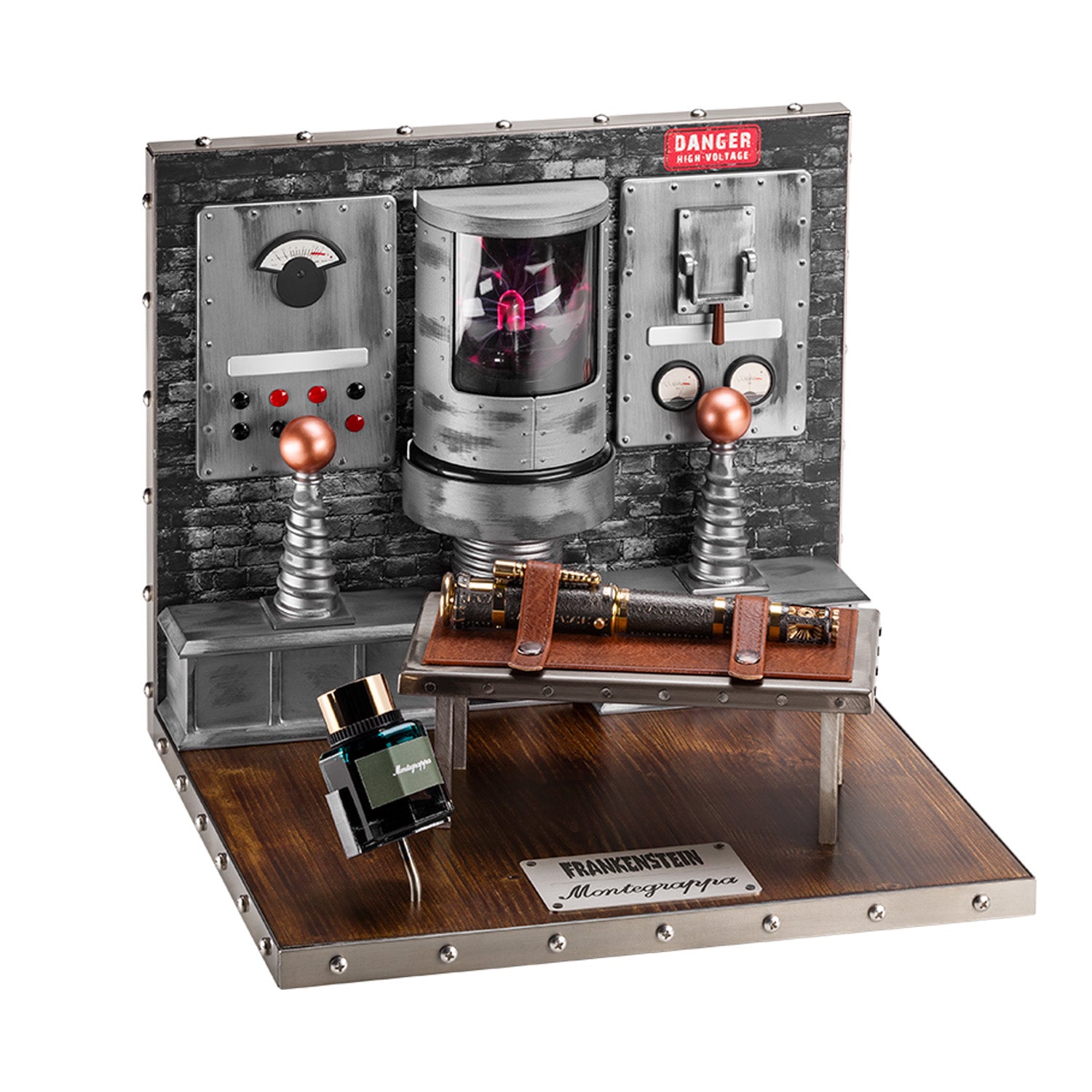
Frankenstein
A companion to Dracula in the Universal Monsters family, Frankenstein uses metallic textures, etched surface patterning, and bold contrasts to channel the creature’s industrial origins.
007 / Goldfinger Special Issue
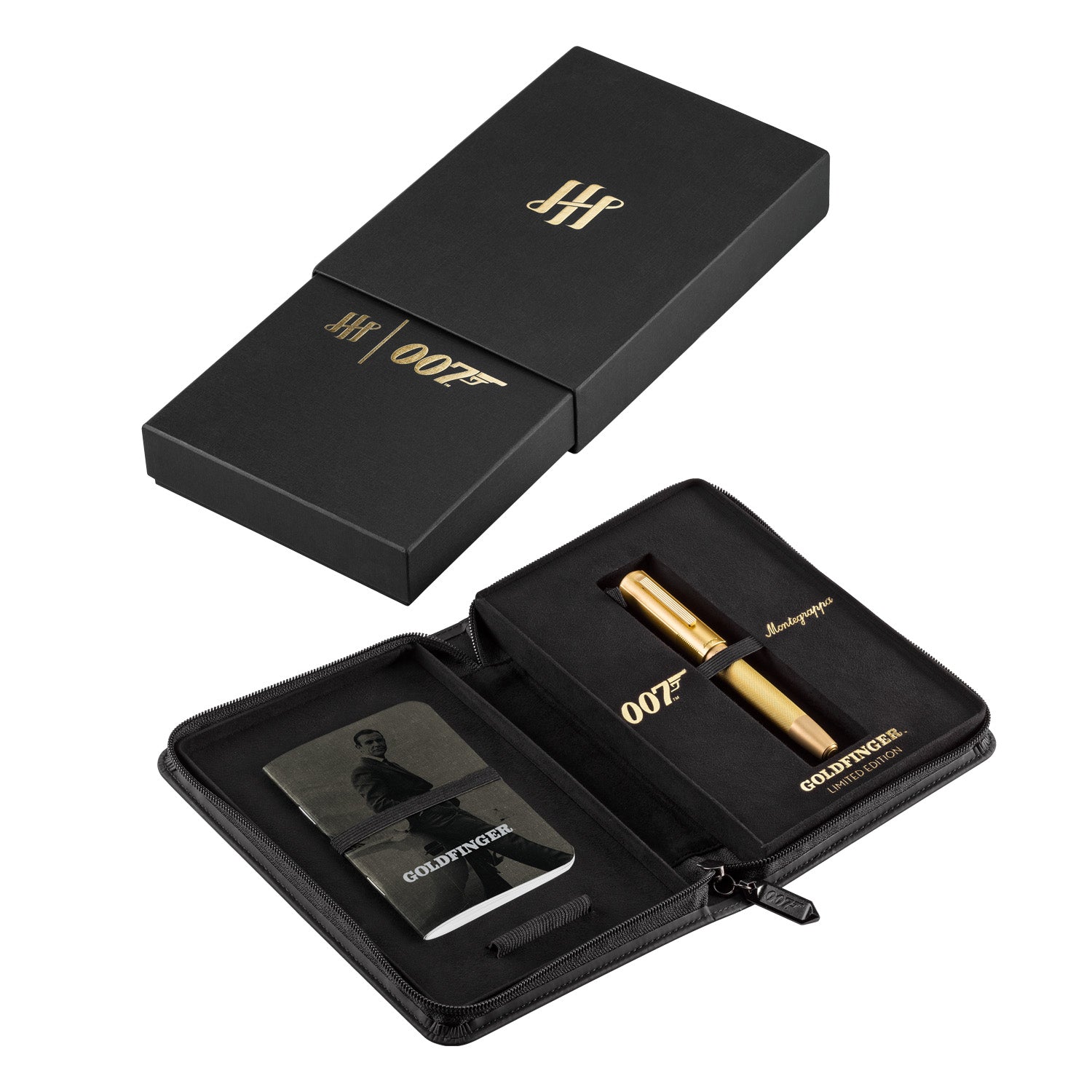
A film-licensed tribute that mixes elegant black and gold finishes with engraved motifs and custom nib stamps — the Goldfinger issue is an example of how cinematic storytelling translates into restrained glamour on a pen body.
Lord of the Rings — Ode to Bag End
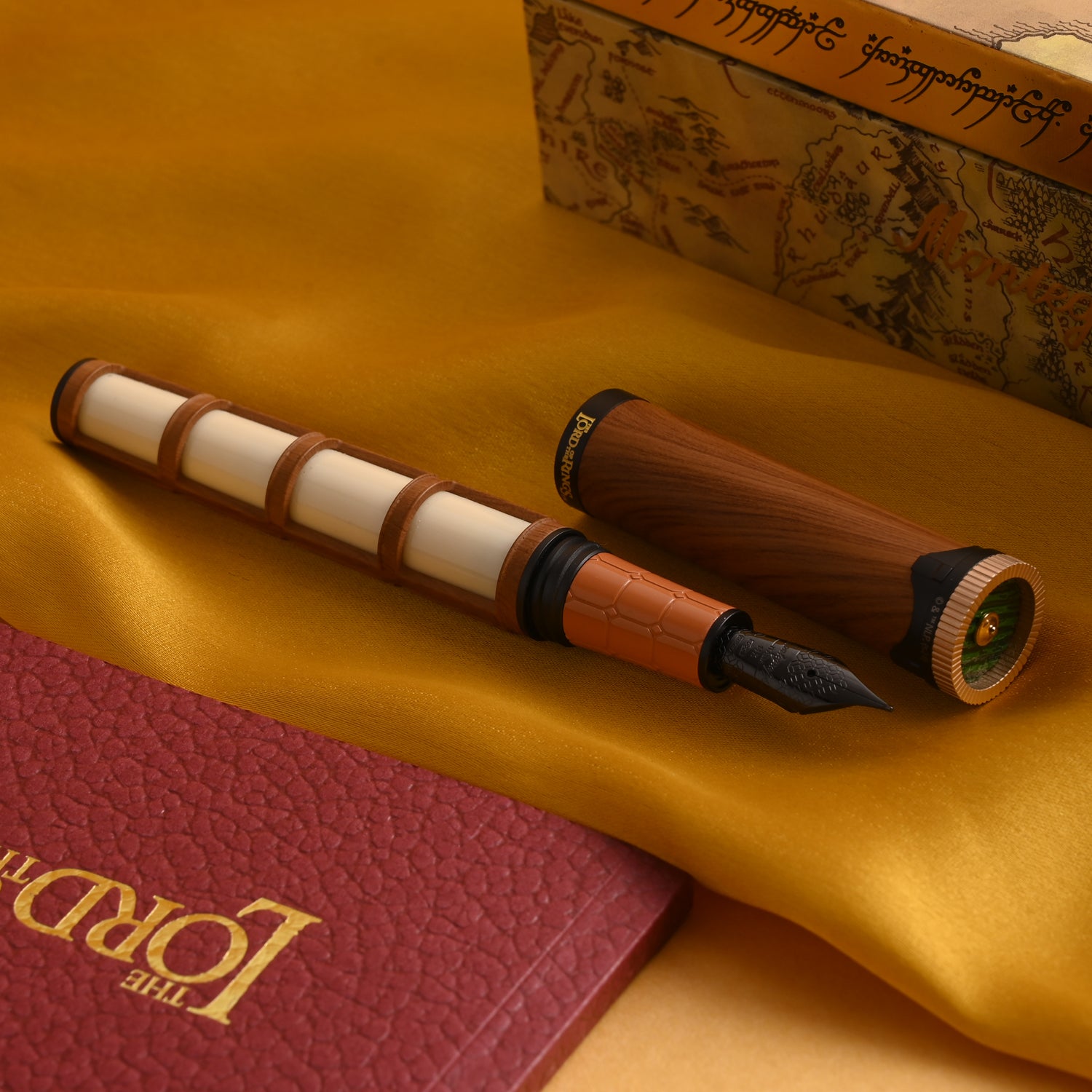
A literary collaboration that maps Tolkien’s world into detailed architectural reliefs, woodgrain textures, and enamel-painted accents that recall the Hobbiton aesthetic. It shows how narrative realism (3D elements and textural inlay) can amplify emotional connection.
Michelangelo 550th Anniversary
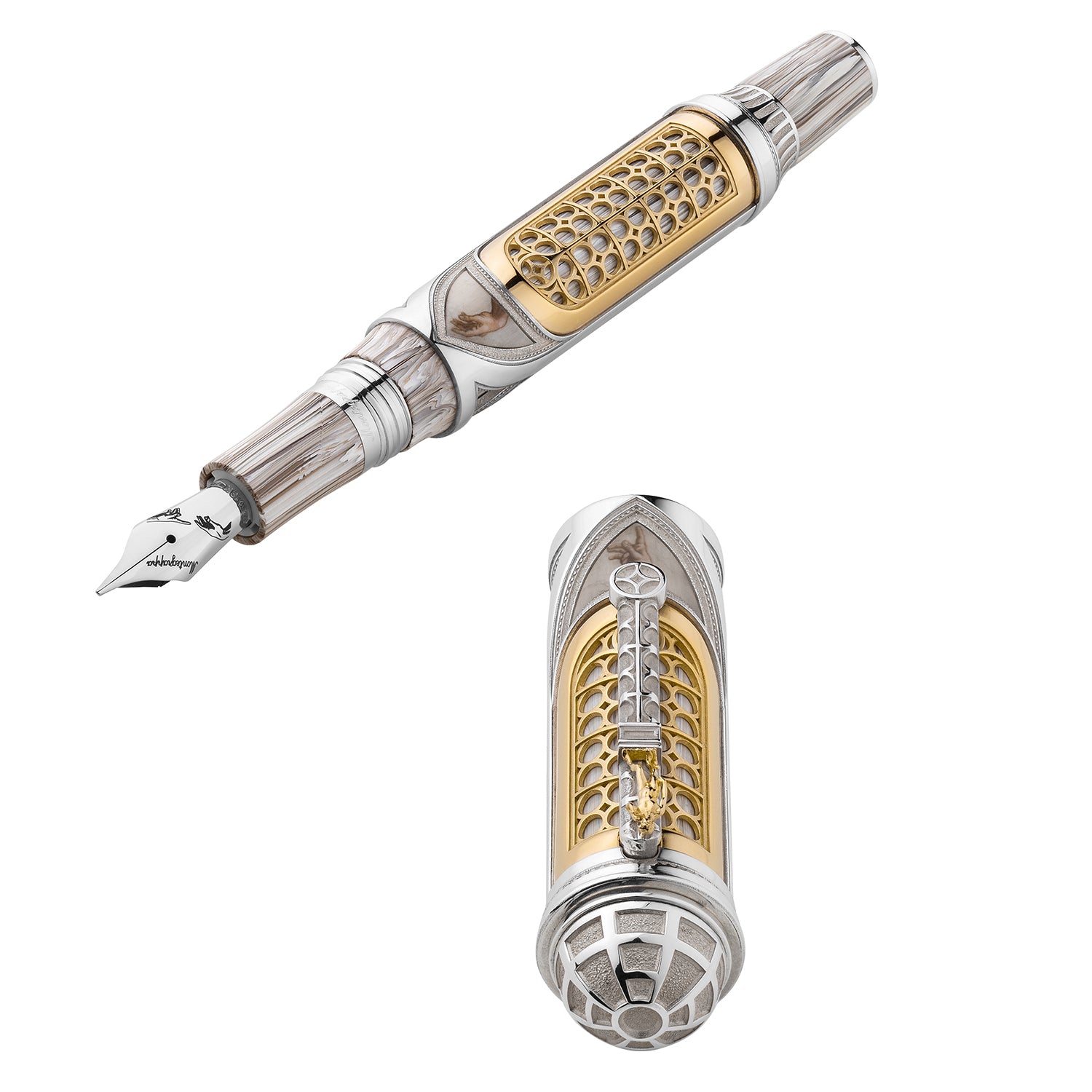
A heritage tribute that leans into sculptural metalwork, gilded trims, and classical motifs inspired by Renaissance art — an example of Montegrappa’s ability to cross from pop culture to fine-art homage.
Harry Houdini
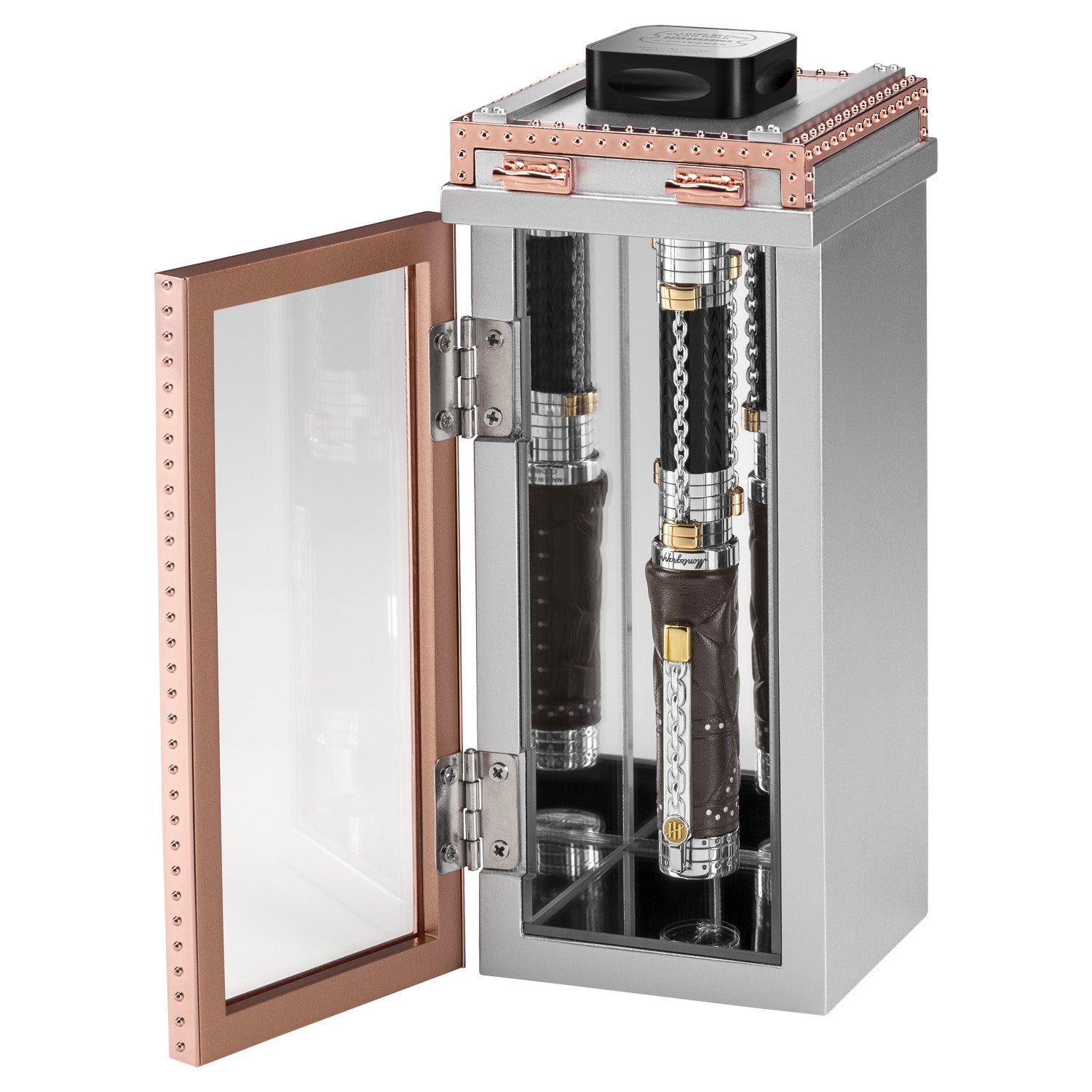
A mechanical, vintage-inspired edition that often includes metalwork reminiscent of locks, keys, and escape-chamber iconography — marrying mechanical intrigue with luxurious finishes.
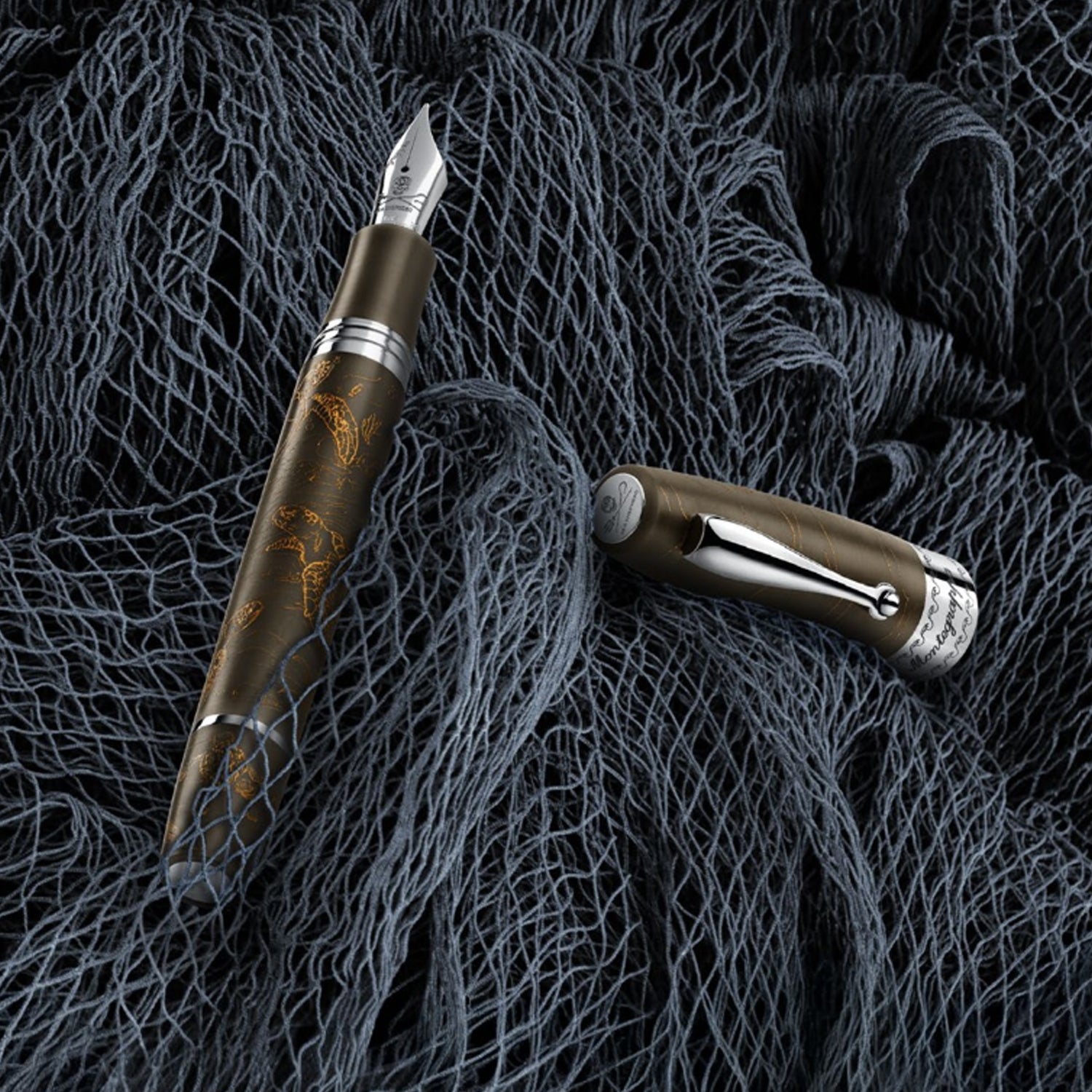
Sea Shepherd: Caretta caretta
A philanthropic collaboration that expresses conservation themes through marine hues, meaningful iconography, and limited runs where part of proceeds support conservation causes.
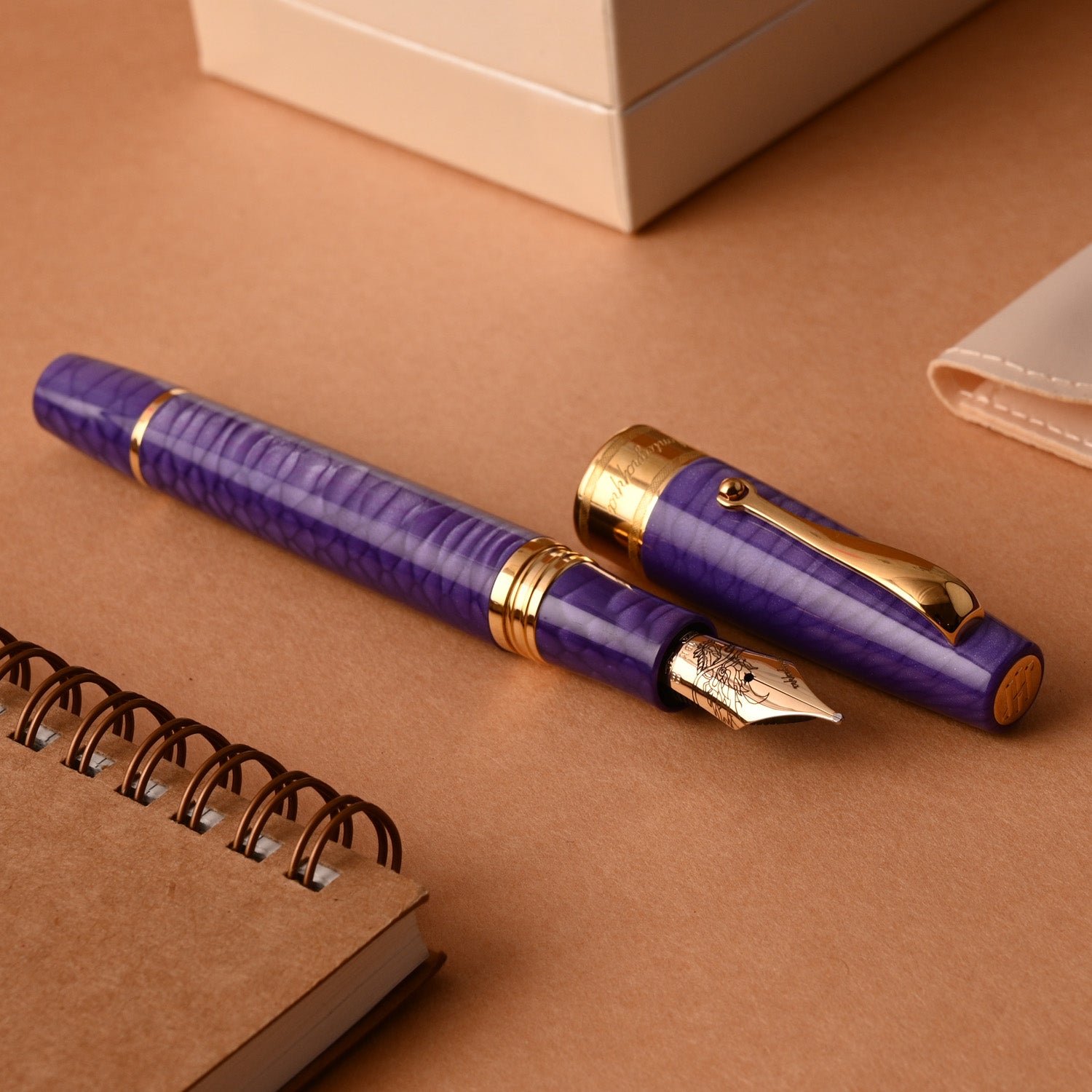
Regal / Year of the Dragon series
Heritage editions that integrate cultural motifs, intricate lacquer work, and limited palette schemes to celebrate zodiac iconography and community traditions.
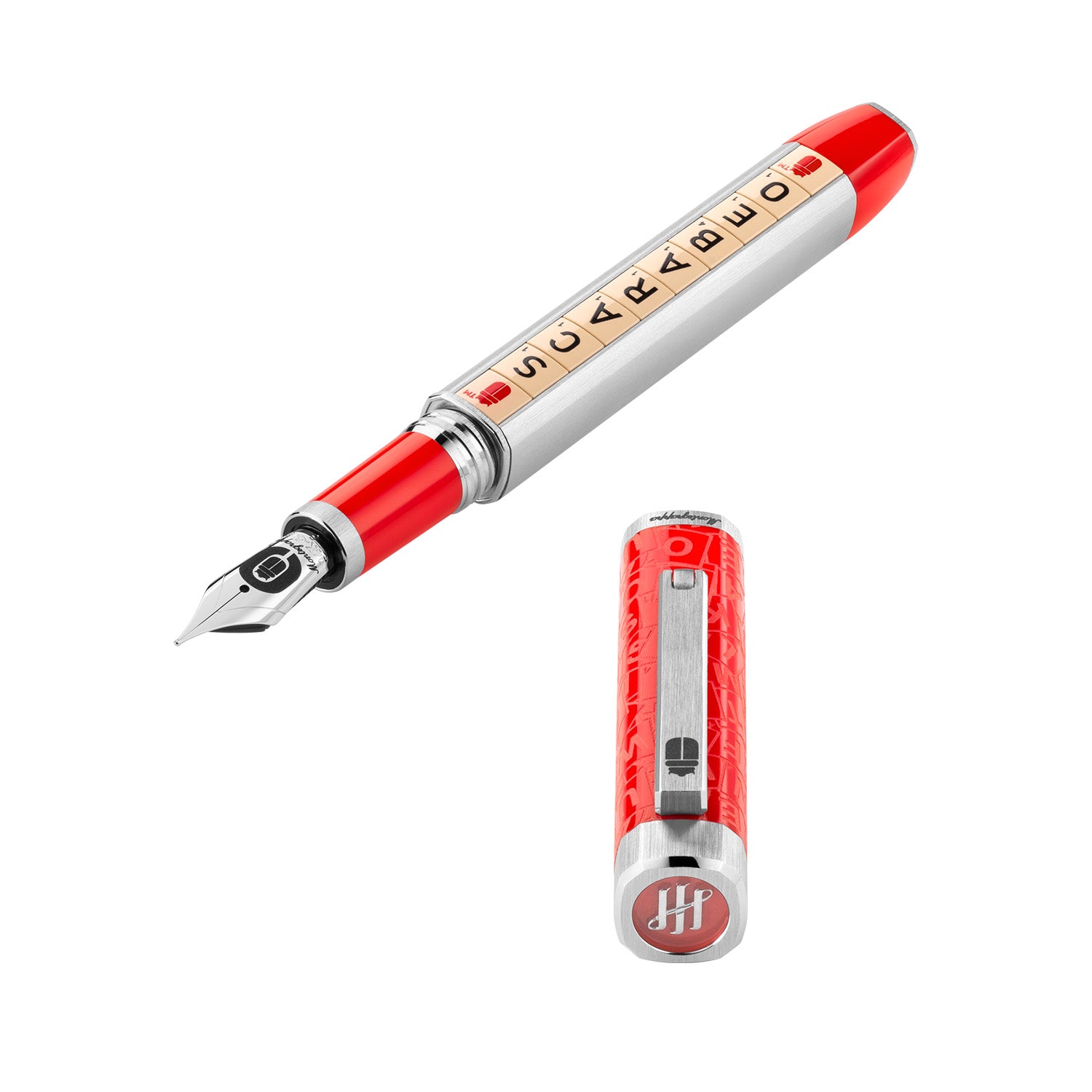
Scarabeo and Marconi models
Designs that explore pattern and texture — from beetle-inspired scarab motifs to Marconi tributes that celebrate innovation in communication and engineering.
This list demonstrates Montegrappa’s range: pop culture collaborations, literary homages, heritage regulative pieces, and philanthropic editions — each with distinct craft priorities.
Packaging, presentation, and the collector experience
Montegrappa limited editions come with packaging designed as part of the artwork. High-end editions include:
- Premium wooden or leather-bound boxes
- Thematic inner linings (velvet, silk with mapped designs)
- Ink bottles or matching accessories (some Universal Monsters and film editions include themed 50ml inks)
- Numbered certificates and artist booklets
- Limited edition outer sleeves with embossing and foil stamping
Collectors report that packaging often becomes part of the display; the unboxing is choreographed to match the story of the pen.
How to preserve and care for a limited edition Montegrappa pen
Proper care preserves both functional performance and collectible value:
- Store in a stable environment: avoid prolonged exposure to sunlight, extreme heat, or high humidity.
- Cap when idle: always cap the pen to prevent nib drying.
- Clean before long storage: flush the ink system with distilled water if the pen will not be used for extended periods.
- Use recommended inks: high-quality fountain pen inks reduce clogging and protect feed materials.
- Service by professionals: for resin polishing, metal replating, or internal repairs, always use authorized service centers to avoid warranty voids.
- Document everything: keep the certificate, box, and purchase receipts in a safe place to preserve provenance.
Following these steps protects aesthetic and resale value.
Buying advice for collectors and investors
When you choose a Montegrappa limited edition, consider three axes: aesthetics, craft, and provenance.
1. Aesthetics: buy what moves you
Choose designs that resonate personally — the emotional connection is what makes a pen a treasured heirloom.
2. Craft: inspect materials and finishing
Ask for high-resolution images or videos showing engraving depth, overlay joins, and nib stamping. Look for evidence of hand finishing: sanding traces, micro-tool marks, and layered lacquering.
3. Provenance and documentation
Always request a certificate of authenticity, serial number verification, and original packaging. For high-value pieces, ensure any secondary-market seller can provide documented chain of ownership.
4. Edition size and theme
Smaller edition sizes (e.g., <500 pieces) often retain collector interest; thematic relevance (film anniversaries, artist collaborations) can also increase long-term desirability.
5. Condition grading
For resale potential, “mint in box” (MIB) is the gold standard. Maintain original packing and paperwork.
Why Montegrappa limited editions retain value
Several factors influence long-term desirability:
- Design uniqueness: original artistic concepts and patented mechanisms.
- Material quality: precious metals and durable lacquers maintain physical allure.
- Edition scarcity: smaller production counts increase rarity.
- Cultural resonance: pens tied to iconic franchises or artists have persistent demand.
- Brand stewardship: Montegrappa’s long history and consistent craft standards inspire collector confidence.
Examples of design decisions that define an edition
To make the process concrete, consider a hypothetical Montegrappa film tribute pen:
- Story selection: choose the iconic scene or symbol (e.g., a villain’s sigil).
- Material mapping: sterling silver for structural motifs, red resin for blood-toned details, black lacquer for contrast.
- Functional additions: hidden compartment, thematic nib engraving, matching 50ml ink with label art.
- Finishing: multi-layer lacquer + micro-engraved serial number + custom paper certificate signed by the design director.
- Marketing narrative: tie the release to a film anniversary and a gallery launch with exclusive previews.
That pipeline — story to release — is how Montegrappa ties craft to culture.
Final thoughts: what makes a Montegrappa limited edition timeless
A Montegrappa limited edition is successful when three elements align: a compelling narrative, impeccable craft, and honest materials. When design teams pair cultural resonance with artisanal techniques — lost-wax casting, hand-engraving, layered lacquer, and careful nib tuning — the pen becomes a collectible artifact rather than a mere instrument.
For buyers, the most rewarding pieces are those that combine emotional connection with documented provenance: pens you enjoy now and which have the structure to remain valuable later. Whether you’re attracted to cinematic collaborations like Dracula or Goldfinger, literary homages such as Lord of the Rings, or heritage tributes like Michelangelo, Montegrappa’s limited editions offer a rare synthesis of storytelling and craft.
If you’re building a collection, source pieces with complete documentation, care for them thoughtfully, and choose designs that speak to you—because in the world of limited editions, personal value is as meaningful as market value.
Explore the options with Makoba
Turn the ideas in this guide into a shortlist that suits the way you write. Our pen specialists can help you compare the options and check product details before you choose.
- Fountain Pens
- Montegrappa 007 Goldfinger Limited Edition Fountain Pen
- Montegrappa Lord of the Rings Ball Pen - Ode to Bag End (Limited Edition)
Ask a Makoba pen specialist · Our QC, dispatch photographs and protective packing · Visit our stores in Chennai, Delhi, Ahmedabad, Gurgaon and Bangalore


Leave a comment