 Skip to content




Can Your Handwriting Actually Improve With a Fountain Pen? — Here's What the Science Says
There is a question that every person who has ever picked up a fountain pen for the first time asks — sometimes out loud, sometimes just to themselves.
Does this actually make my handwriting better?
It sounds almost too good to be true. The idea that switching from a ballpoint or a gel pen to a fountain pen could genuinely, measurably improve the quality of your handwriting feels like something a pen enthusiast would say to justify an expensive hobby. It sounds like the kind of claim that belongs in a marketing brochure rather than a scientific paper.
Except the science actually supports it.
Not in a vague, anecdotal, feel-good way. In a specific, measurable, neurologically grounded way that explains exactly why fountain pens produce better handwriting — and why the improvement is not just cosmetic but deeply functional.
This is the full story — the science, the mechanics, the psychology, and the practical reality of what happens to your handwriting when you make the switch to a fountain pen. And at the end of it, you will understand not just whether a fountain pen can improve your handwriting, but which fountain pen will do it best — and where to find it in India.
The Handwriting Crisis Nobody Is Talking About
Why Indian Handwriting Is Getting Worse
Walk into any school in India today and ask a teacher about handwriting. The answer you will get, almost universally, is the same: it is getting worse. Children who grew up with tablets before they learned to write properly. Students whose grip has been shaped by stylus use rather than pen training. Professionals whose handwriting has deteriorated through years of keyboard dependency.
This is not an Indian problem alone — it is a global phenomenon. But in India, where handwriting has historically been treated as a serious academic skill, the decline is particularly visible and particularly consequential. Board examinations are still handwritten. Professional correspondence is still signed by hand. Legal documents require physical signatures. The ability to write clearly and confidently remains a practical necessity — and it is a skill that is quietly disappearing.
The Ballpoint Problem
A significant part of the handwriting deterioration story is the ballpoint pen — specifically, the way it demands to be used. A ballpoint pen requires downward pressure to push the viscous oil-based ink onto the page. The harder you press, the more ink flows. This creates a writing habit built around pressure — a tense, effortful grip that tires the hand quickly and produces inconsistent line quality.
Children taught to write with cheap ballpoints develop pressure-based writing habits early. They grip the pen tightly, press down hard, and produce writing that is technically functional but aesthetically poor and physically exhausting to produce over extended periods. These habits, once established, are difficult to break.
The fountain pen works on an entirely different mechanical principle — and that difference is where the handwriting improvement story begins.
The Mechanics — Why a Fountain Pen Physically Changes How You Write
Zero Pressure Writing — The Foundation of Everything
A fountain pen does not require pressure to write. The ink flows from the reservoir through the feed to the nib tip by capillary action — a physical phenomenon driven by surface tension rather than mechanical force. The nib simply needs to touch the paper and move across it. The ink follows automatically.
This means that a properly used fountain pen requires almost no downward pressure at all. The pen practically writes by itself — the writer's job is to guide it across the page, not to force ink out of it.
The consequence of this for handwriting is profound. When pressure is removed from the equation, the entire writing posture changes. The grip relaxes. The shoulder drops. The wrist unlocks. The movement shifts from a tense, finger-driven scratching motion to a fluid, arm-guided gliding motion. The pen begins to move the way handwriting experts have always said it should — smoothly, consistently, and without effort.
The Grip Revolution
One of the most measurable changes that fountain pen users report is a transformation in their grip. The death grip that most ballpoint users maintain — fingers white-knuckled around the barrel, pressing down with maximum force — is not just uncomfortable. It is the primary cause of poor letter formation, inconsistent line weight, and the cramped, angular appearance that characterises stressed handwriting.
A fountain pen's zero-pressure requirement actively discourages the death grip. If you press too hard on a fountain pen nib, the tines splay apart and the ink flow becomes erratic or the nib scratches. The pen provides immediate, tactile feedback when you are using too much pressure. It teaches correct grip through consequence — relax, and the pen writes beautifully; tense up, and it does not.
This feedback loop is not available with a ballpoint. A ballpoint rewards pressure. A fountain pen rewards relaxation. And relaxed writing is, by every measure, better writing.
Nib Width and Line Variation — The Aesthetic Transformation
A fountain pen nib produces line variation that a ballpoint physically cannot. As you write with a fountain pen, the slight natural variation in pressure and angle produces subtle differences in line width that give handwriting character, rhythm, and visual elegance.
This is why handwritten letters produced with a fountain pen look so different from those produced with a ballpoint — even when the underlying letterforms are identical. The fountain pen's line has life. It has variation. It has the quality that calligraphers call modulation — the organic variation between thick and thin strokes that makes writing beautiful to look at.
This aesthetic improvement happens automatically with a fountain pen. It does not require calligraphy training or special technique. It is a product of the nib's mechanical properties interacting with normal writing motion.
The Neuroscience — What Happens in Your Brain When You Write With a Fountain Pen
The Slow Writing Advantage
Research from the Norwegian University of Science and Technology, published in Frontiers in Psychology, used EEG technology to measure brain activity during handwriting and typing. The findings were striking: handwriting produced significantly more complex neural activity than typing — engaging visual processing, motor control, and language centres simultaneously in ways that keyboard input simply does not replicate.
But within handwriting itself, the quality and character of the writing instrument matter. Writing that requires greater motor attention — more deliberate letter formation, more conscious grip management, more awareness of the pen's feedback — produces greater neural engagement than writing that is purely automatic.
A fountain pen, with its specific requirements around angle, pressure, and movement, demands more conscious motor attention than a ballpoint. This is not a disadvantage. It is precisely what drives improvement. The brain's motor learning systems — the cerebellum and basal ganglia — strengthen through deliberate, feedback-rich practice. Every time you write with a fountain pen and feel the difference between a smooth stroke and a resistant one, between a correct angle and an incorrect angle, your brain is learning and improving.
Motor Memory and Muscle Learning
Handwriting improvement is fundamentally a motor learning challenge. Like any physical skill — playing the piano, swinging a cricket bat, throwing a ball — handwriting quality is determined by the quality of the motor memories encoded in the brain's neural pathways.
Motor memories are strengthened by deliberate practice with clear feedback. A fountain pen provides exactly this — continuous, tactile feedback about grip, pressure, angle, and movement that a ballpoint pen does not offer. Every session with a fountain pen is, in neurological terms, a higher-quality practice session than the equivalent time spent with a ballpoint.
Over weeks and months of regular use, the motor patterns associated with relaxed, fluid, low-pressure writing become automatic. The improvement in handwriting quality that fountain pen users report is not imaginary — it is the product of superior motor learning driven by superior feedback.
The Attention Effect — Writing Slowly to Write Better
There is a paradox at the heart of handwriting improvement: writing more slowly, with more attention, produces better results than writing quickly with habitual, unconsidered motion. This is well established in motor learning research — deliberate practice at reduced speed, with full attention to quality, produces faster improvement than high-speed repetition of existing habits.
A fountain pen naturally encourages slightly slower, more deliberate writing. The nib's feedback, the ink's flow properties, and the pen's weight and balance all invite a more considered writing pace. Users who switch from ballpoints to fountain pens consistently report that they slow down — and that their writing improves as a direct result.
This slowing down is not inefficiency. It is the mechanism of improvement.
The Practical Evidence — What Fountain Pen Users Actually Experience
The Testimony of Teachers and Educators
Across India and internationally, educators who have introduced fountain pens into their classrooms report consistent improvements in student handwriting quality. The reduction in grip pressure alone produces visible improvements in letter formation and consistency within weeks of introduction.
Several Indian schools — particularly those following traditional educational philosophies — have retained fountain pen use as a mandatory element of early handwriting education precisely because of this documented benefit. The fountain pen is not just a writing instrument in these institutions — it is a handwriting training tool.
The Adult Writer's Transformation
For adult writers whose handwriting has deteriorated through years of keyboard use and ballpoint dependency, the fountain pen offers a genuine rehabilitation pathway. Adults who commit to daily fountain pen writing — journaling, correspondence, note-taking — consistently report measurable improvement in handwriting quality within six to eight weeks.
The improvement follows a predictable pattern: first, the grip relaxes, and fatigue during extended writing reduces. Then, letter formation becomes more consistent as the motor patterns associated with fountain pen writing strengthen. Finally, the overall aesthetic quality of the writing improves as line variation and spacing become more natural.
The Student Advantage — Examinations and Beyond
For Indian students facing board examinations and competitive tests that require hours of continuous handwriting, the fountain pen offers a practical performance advantage. The zero-pressure writing requirement dramatically reduces hand fatigue during long writing sessions — the physical endurance advantage alone is significant for a three-hour examination.
Beyond fatigue, the improved legibility that fountain pen use produces can have a direct impact on examination results. Examiners who can read an answer clearly are better placed to assess it fairly than those who must decipher cramped, pressured script. The fountain pen's legibility advantage is a genuine academic advantage.
The Fountain Pens at Makoba That Will Transform Your Handwriting
Makoba stocks India's finest and most comprehensive collection of fountain pens — from the perfect beginner's instrument to extraordinary collector pieces that will accompany you for a lifetime. Here are the pens that will genuinely transform your handwriting, chosen for specific writing needs and skill levels.
For Beginners — The Perfect Starting Point
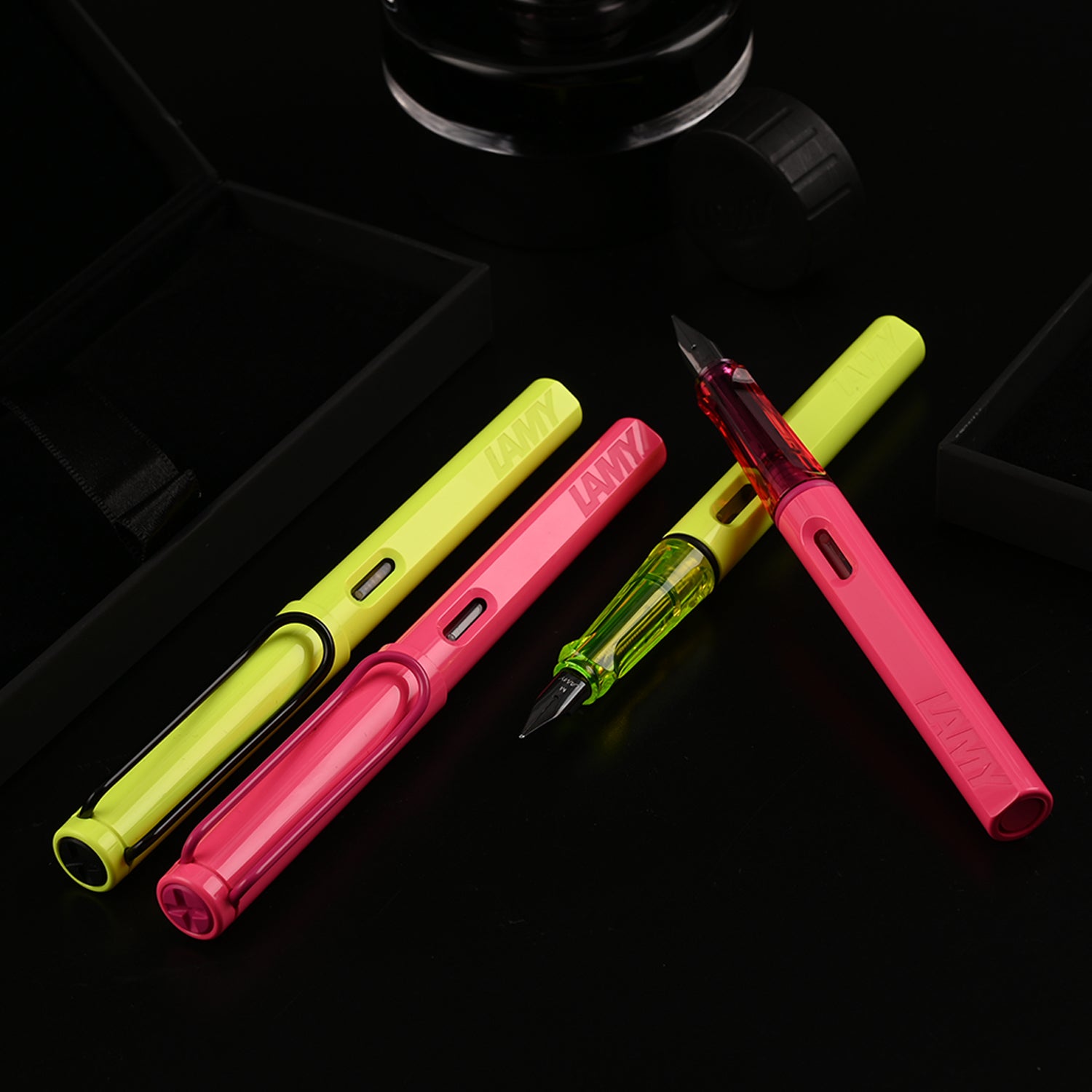
Lamy Safari Fountain Pen
The Lamy Safari is the world's most recommended fountain pen for handwriting improvement — and with good reason. Its ergonomic triangular grip section physically guides your fingers into the correct writing position. You cannot grip a Lamy Safari incorrectly — the grip shape prevents it. For anyone whose handwriting suffers from poor grip habits, the Safari is a corrective tool as much as a writing instrument.
Key Highlights:
-
Triangular grip section guides correct finger placement automatically
-
Lightweight ABS body reduces fatigue during long writing sessions
-
Available in Extra-Fine, Fine, Medium, and Broad nib sizes
-
Smooth, consistent steel nib requires minimal pressure
-
Available in a wide range of vibrant colours
-
Compatible with Lamy cartridges and Z28 converter for bottled ink
-
Exceptional value — one of the best entry points into fountain pen writing
-
Ideal for students, beginners, and anyone rebuilding handwriting habits
The Lamy Safari's grip correction effect alone makes it one of the most effective handwriting improvement tools available at any price. Start here and the improvement will be visible within weeks.
Pilot Metropolitan Fountain Pen
The Pilot Metropolitan is a cult favourite for a reason that is directly relevant to handwriting improvement — its nib is extraordinarily smooth and consistent, making the zero-pressure writing experience immediately accessible even to complete beginners.
The Metropolitan's brass body gives it a satisfying weight that encourages proper pen angle and reduces the tendency to tense the grip. The weight does the work — your hand simply guides.
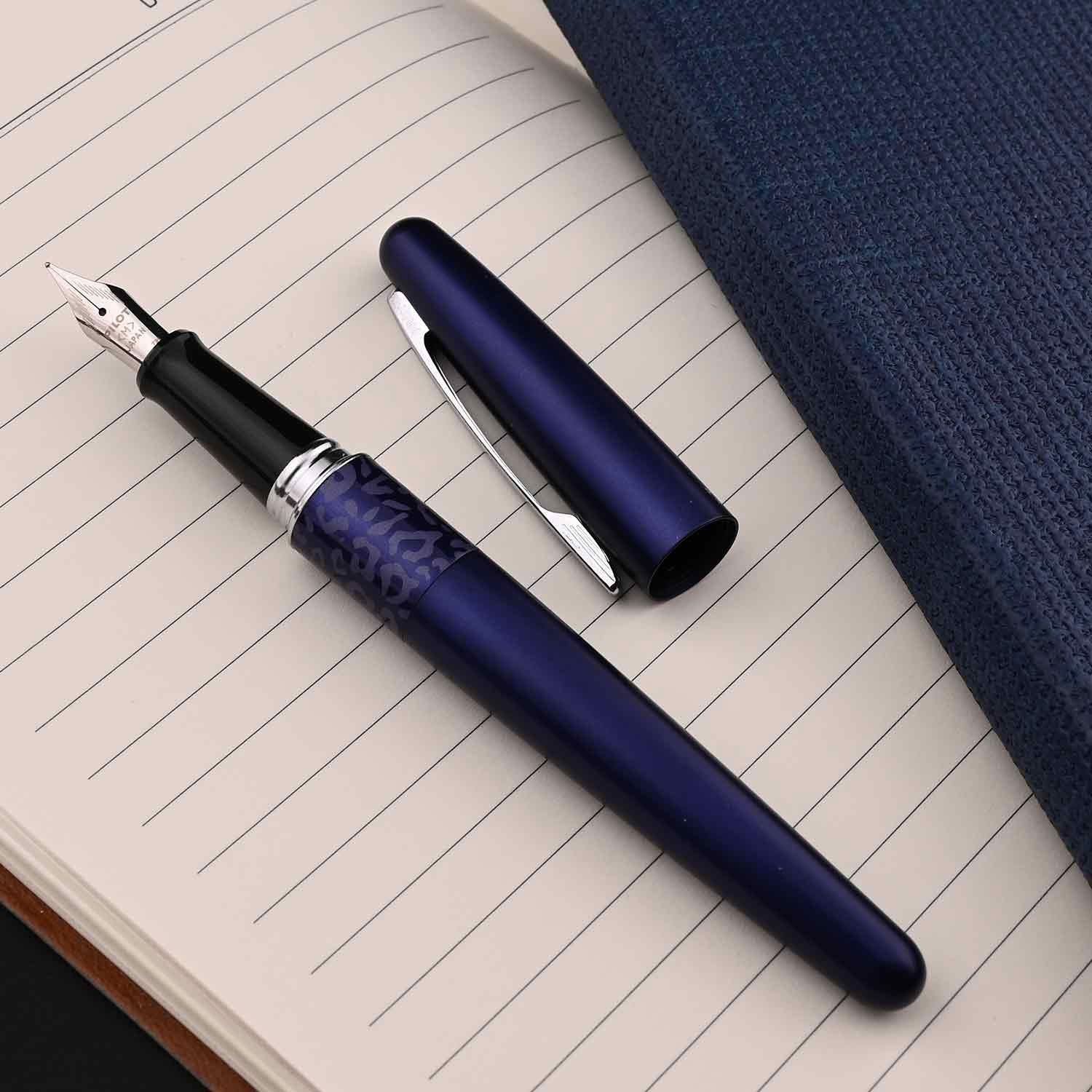
Key Highlights:
-
Brass barrel provides ideal writing weight and balance
-
Exceptionally smooth Pilot steel nib — effortless from the first stroke
-
Includes CON-20 squeeze converter for bottled ink
-
Available in multiple finishes and patterns
-
Fine and Medium nib options ideal for Indian handwriting styles
-
Exceptional quality at an accessible price point
-
Japanese nib precision — consistent flow with minimal pressure required
-
Perfect for daily writing practice and handwriting development
TWSBI Eco Fountain Pen
The TWSBI Eco brings piston-filling convenience and demonstrator transparency to the entry-level market — and its large ink capacity makes it the ideal pen for the sustained daily writing practice that drives handwriting improvement.
The transparent body allows you to monitor ink levels at a glance, encouraging regular use rather than the pen sitting forgotten in a drawer. Regular use is the engine of handwriting improvement — and the TWSBI Eco makes regular use easy and enjoyable.
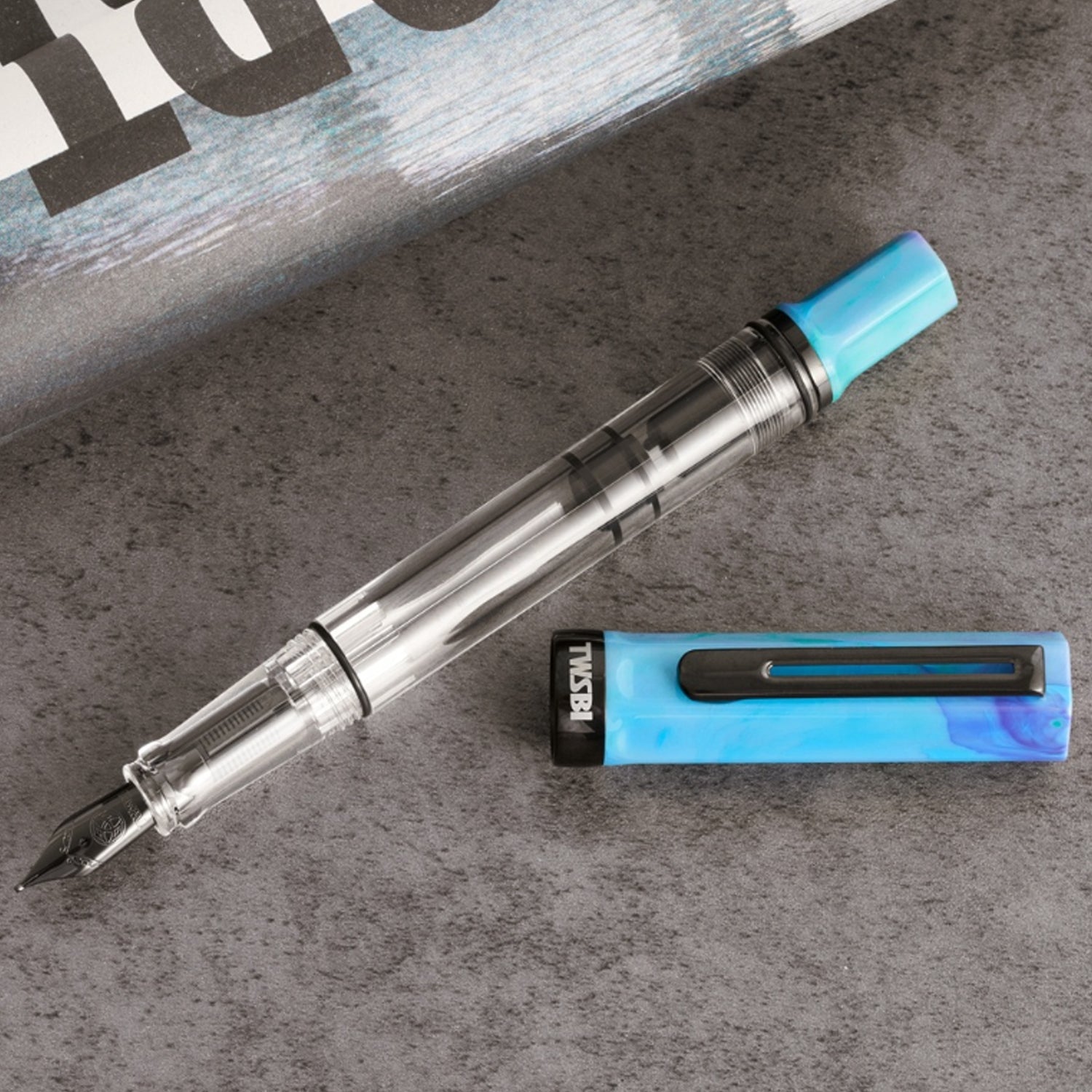
Key Highlights:
-
Piston filling mechanism — large ink capacity for sustained writing sessions
-
Transparent demonstrator body — monitor ink levels easily
-
Available in Extra-Fine to Double Broad nib sizes
-
Smooth, consistent nib performance across all sizes
-
Easy to disassemble and clean — excellent for beginners learning pen maintenance
-
Available in multiple body colours
-
Exceptional value for a piston filler
-
Encourages daily writing through convenient ink capacity
For Intermediate Writers — Stepping Up the Experience
Kaweco Sport Fountain Pen
The Kaweco Sport's compact design makes it the ideal everyday carry fountain pen — small enough to live in a pocket or a bag, ready to write at any moment. The accessibility of a pen that is always with you is a significant driver of the consistent daily practice that improves handwriting.
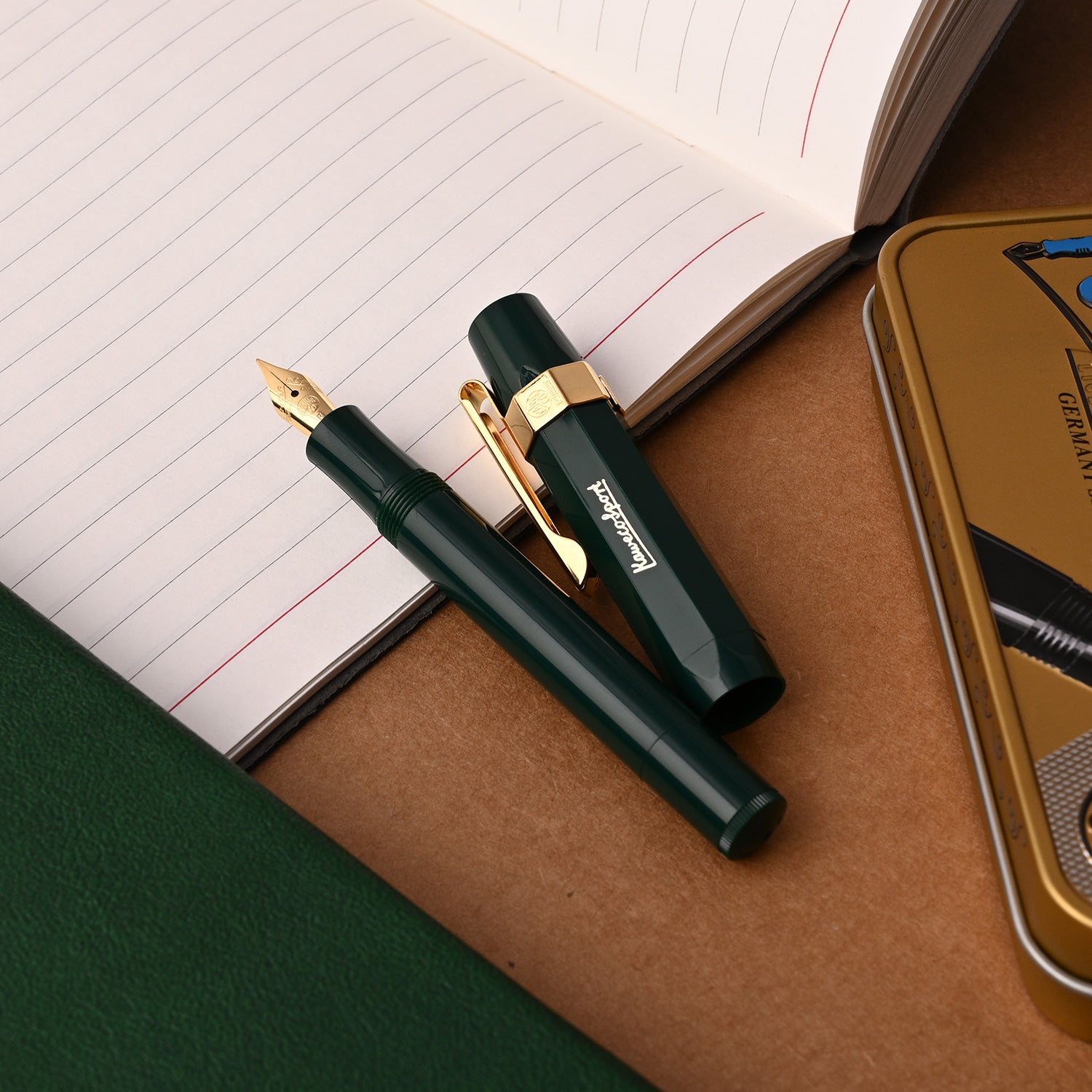
Key Highlights:
-
Pocket-sized when capped — ideal everyday carry
-
Cap posts to provide full writing length
-
Available in acrylic, aluminium, and brass bodies
-
A wide range of nib sizes from Extra-Fine to Double Broad
-
Unique vintage design unchanged since 1935
-
Available in an extraordinary range of colours and materials
-
Uses standard international short cartridges
-
Loved by artists, writers, and everyday fountain pen users worldwide
Platinum Preppy and Plaisir Series
Platinum's patented Slip and Seal cap mechanism prevents ink from drying out for up to two years — making these pens the perfect choice for writers who do not use their fountain pen every single day but still want it to be ready when they pick it up.
The consistent flow that Platinum's Japanese engineering provides makes these pens particularly effective for handwriting practice — the ink is always ready, always smooth, and always exactly as expected.
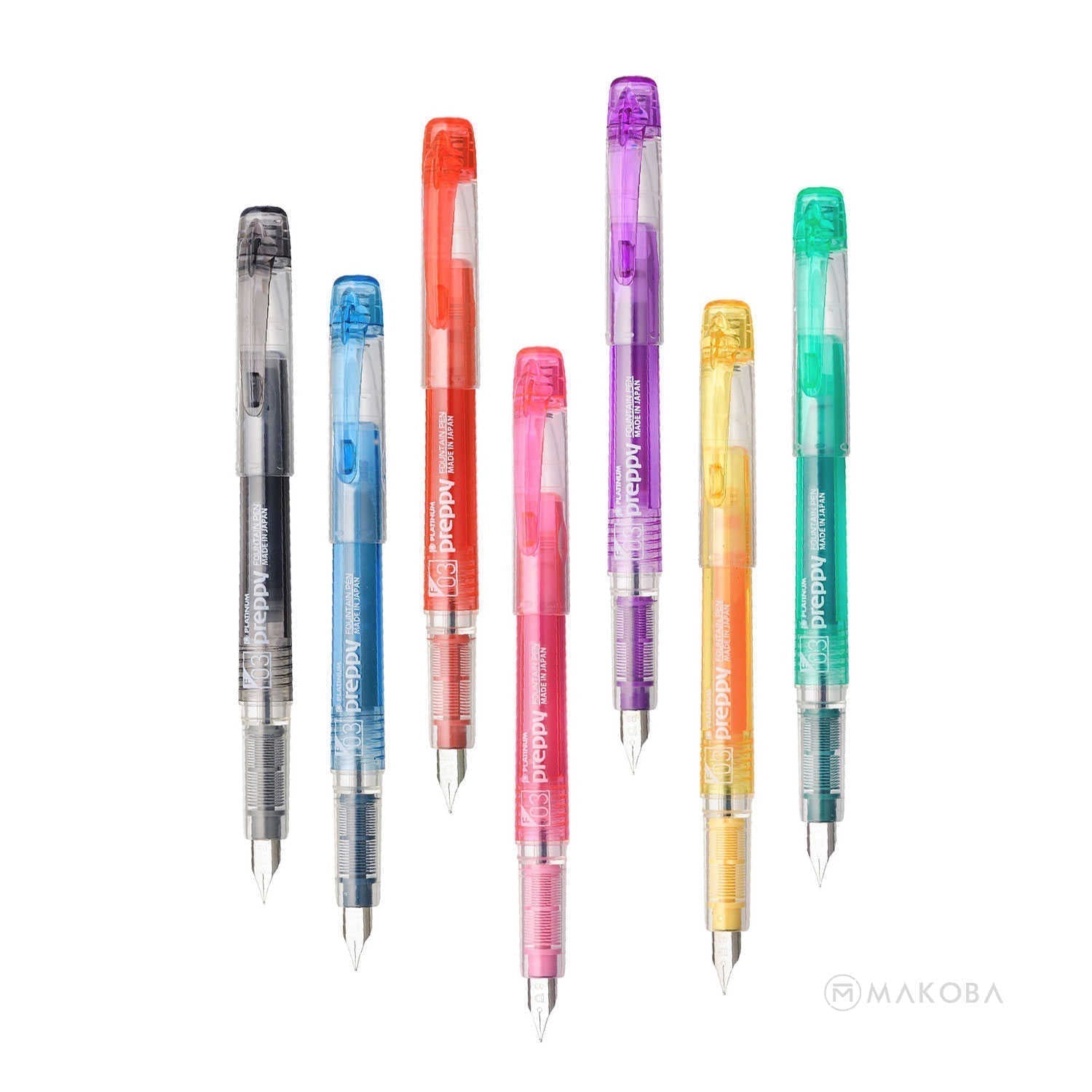
Key Highlights:
-
Patented Slip and Seal cap — ink stays fresh for up to two years
-
Japanese nib precision — consistent, reliable flow every time
-
Available in steel nib variants across the range
-
Lightweight and comfortable for extended writing sessions
-
Ideal for occasional writers who want consistent performance
-
Available in multiple colours and finishes
-
Excellent gateway into Japanese fountain pen engineering
-
Great for students and professionals who write intermittently
Diplomat Traveller Fountain Pen
The Diplomat Traveller brings German engineering precision to a price point that makes it accessible to serious everyday writers. Its smooth German steel nib and robust construction make it a reliable daily companion for anyone committed to improving their handwriting through consistent practice.
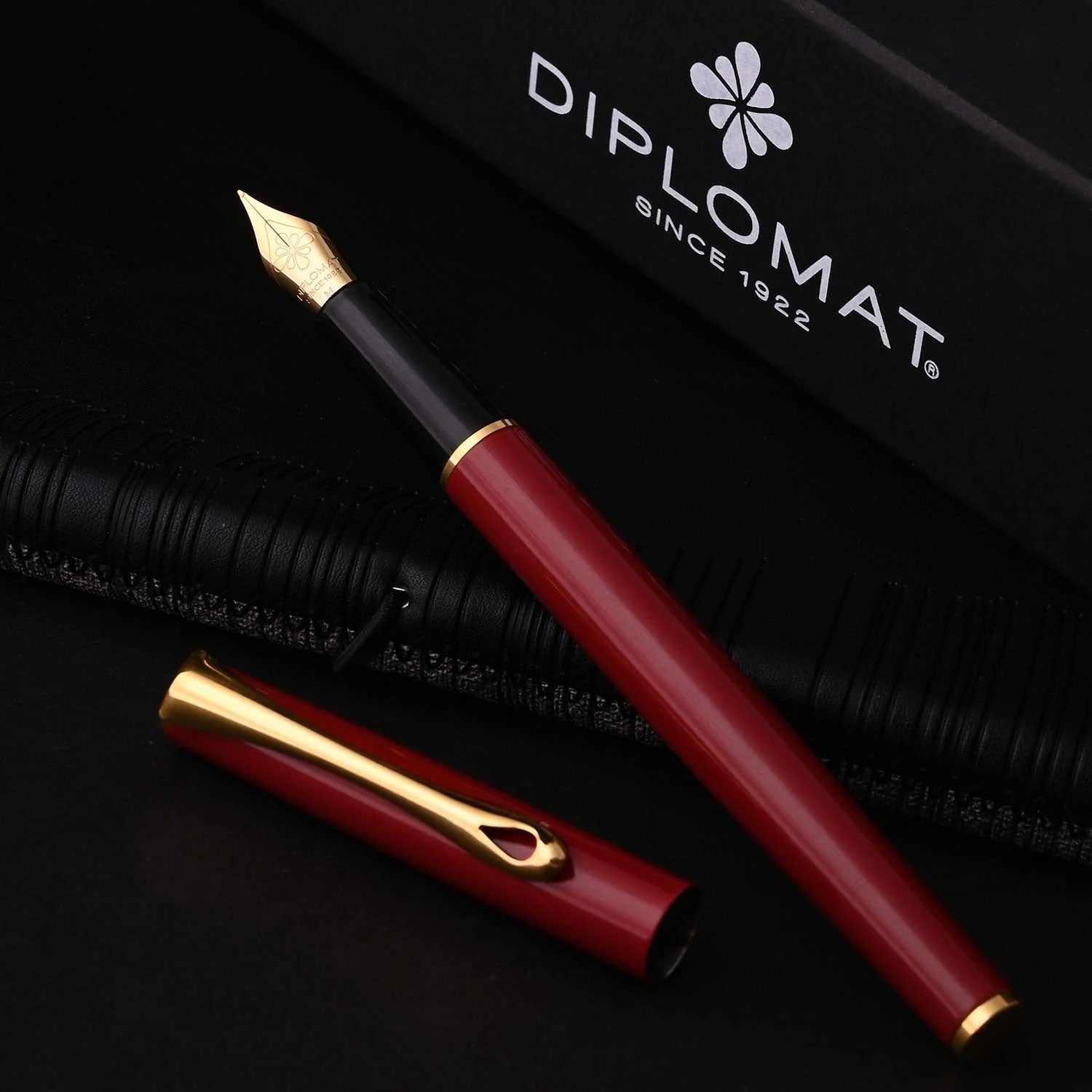
Key Highlights:
-
German-engineered steel nib — precision and consistency
-
Available in bold, distinctive colour options
-
Lightweight design ideal for extended writing sessions
-
Compatible with international cartridges and converters
-
Excellent value in the mid-range price category
-
Robust construction suitable for daily professional use
-
Smooth, reliable performance across nib sizes
-
Ideal for professionals and students committed to daily writing
For Serious Writers — The Premium Handwriting Experience
Sailor 1911 Series — Japanese Precision for Indian Handwriting
The Sailor 1911 is widely regarded as one of the finest everyday writing fountain pens in the world — and its 21K rhodium-plated gold nib offers a writing experience that makes handwriting improvement almost inevitable.
Sailor's gold nibs have a characteristic springiness that provides gentle feedback and subtle line variation without the stiffness of a steel nib or the full flex of a vintage pen. This feedback is ideal for developing sensitivity to pen angle and pressure — the two variables that most directly determine handwriting quality.
Sailor's Fine and Medium nibs are particularly well suited to Indian handwriting styles — producing crisp, clear lines with excellent ink definition on standard Indian paper.
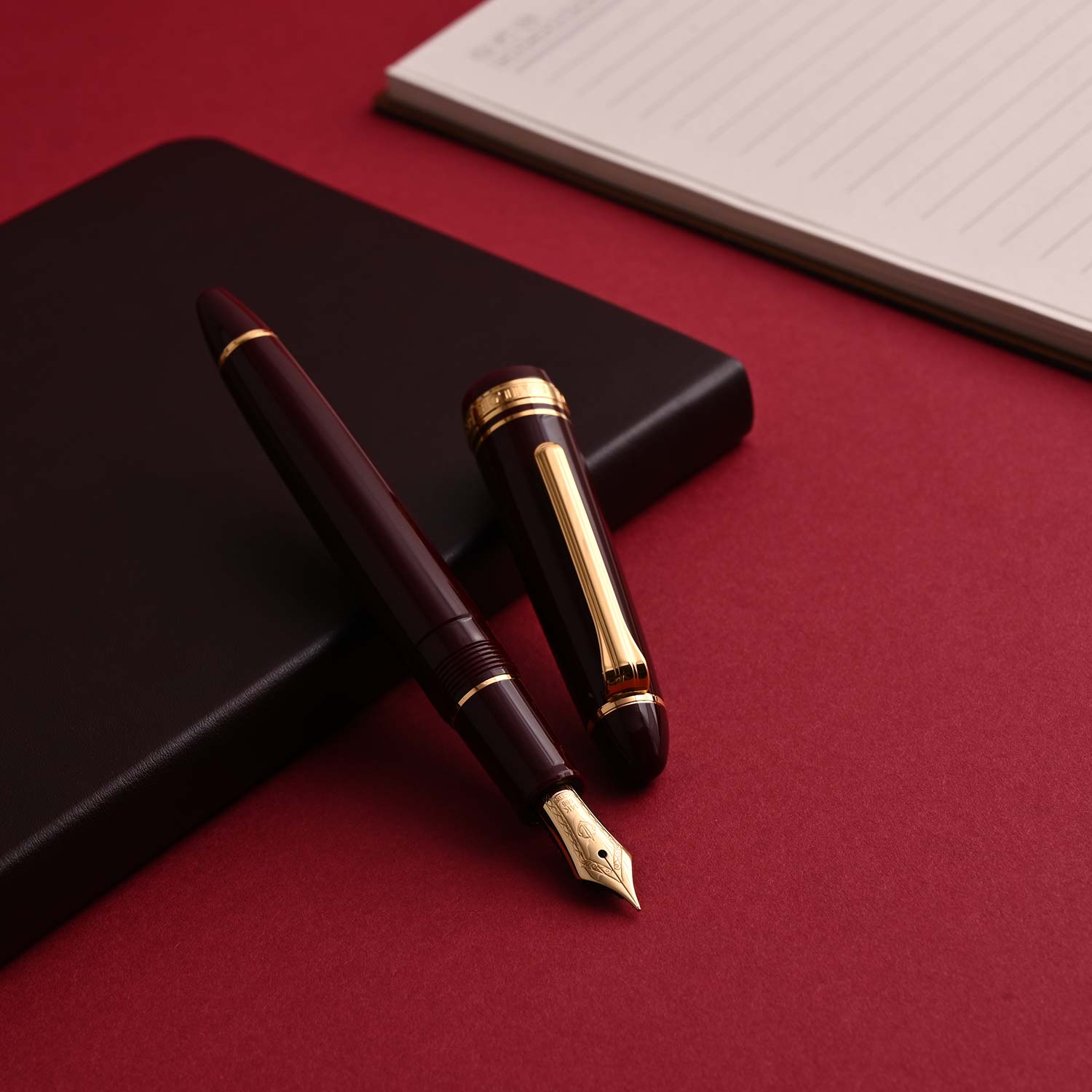
Key Highlights:
-
21K rhodium-plated gold nib — the finest writing experience in Japanese pen making
-
Characteristic nib springiness provides ideal handwriting feedback
-
Available in Fine, Medium, and Zoom nib options
-
Fine and Medium nibs are ideal for Indian handwriting styles
-
Large ink capacity via cartridge-converter system
-
Available in the classic 1911 Large and compact 1911 Small
-
Built in Japan to exacting quality standards
-
A pen that improves with use — the gold nib adapts subtly to your writing style over time
Pelikan M400 and M600 — German Engineering for the Serious Writer
Pelikan's Souverän series represents the pinnacle of German fountain pen engineering — and the M400 and M600 are the ideal size for most adult hands. The piston-filling mechanism provides a large ink capacity for sustained writing sessions, and the 14K gold nib delivers a writing experience that makes extended practice a genuine pleasure.
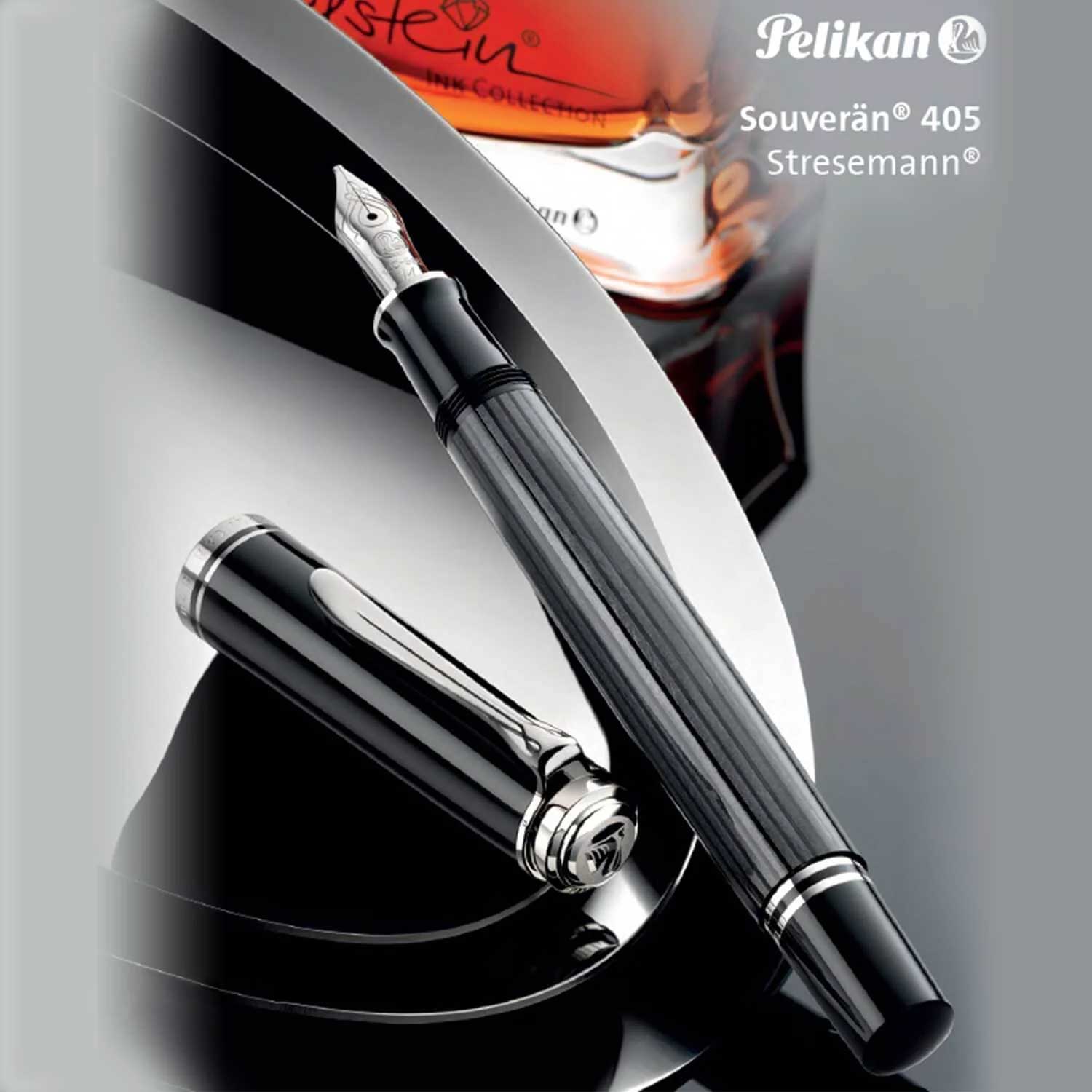
Key Highlights:
-
14K gold nib — smooth, responsive, and beautifully balanced
-
Piston filling mechanism — large capacity for sustained writing
-
Classic striped celluloid body in multiple colour combinations
-
Made in Germany to extraordinary engineering tolerances
-
The nib adapts subtly to your writing style over months of use
-
Available in nib sizes from Extra-Fine to Broad
-
Iconic design that has remained essentially unchanged for decades
-
A lifetime writing instrument — the pen that grows with your handwriting
Pilot Custom 74 and Custom 742 — Japan's Finest Everyday Writers
The Pilot Custom series represents Japanese fountain pen engineering at its most refined and accessible. The 14K gold nib on the Custom 74 and the 14K gold nib with various specialty options on the Custom 742 provide a writing experience that is simultaneously smooth, responsive, and deeply characterful.
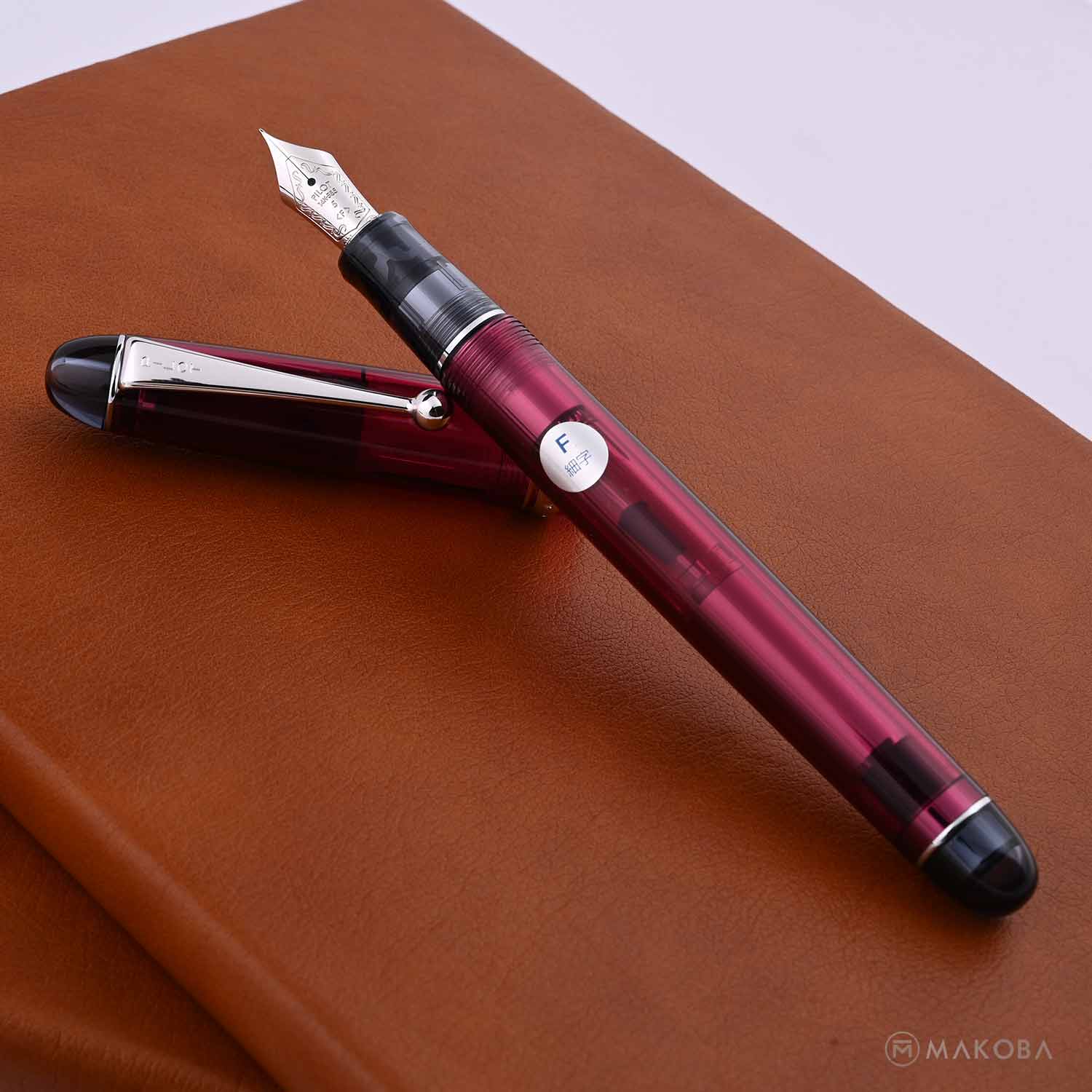
Key Highlights:
-
14K gold nib with Pilot's characteristic smooth flow
-
Available in Fine, Medium, Broad, and specialty nib options
-
CON-70 converter included — excellent ink capacity
-
Classic, understated Japanese design
-
Ideal for daily writing practice and extended note-taking sessions
-
Consistent, reliable performance across all writing conditions
-
The serious writer's everyday companion
-
Available at Makoba with full warranty and after-sales support
The Inks That Make the Difference
Why the Right Ink Amplifies Handwriting Improvement
The fountain pen is only half of the handwriting improvement equation. The ink you fill it with directly affects the writing experience — and therefore the quality of the practice that drives improvement.
A well-lubricated, smooth-flowing ink reduces the temptation to apply pressure and allows the nib to glide across the page with minimal resistance. A dry or inconsistent ink creates friction, encourages pressure, and undermines the zero-pressure writing habit you are trying to build.
At Makoba, the ink selection is as carefully curated as the pen collection.
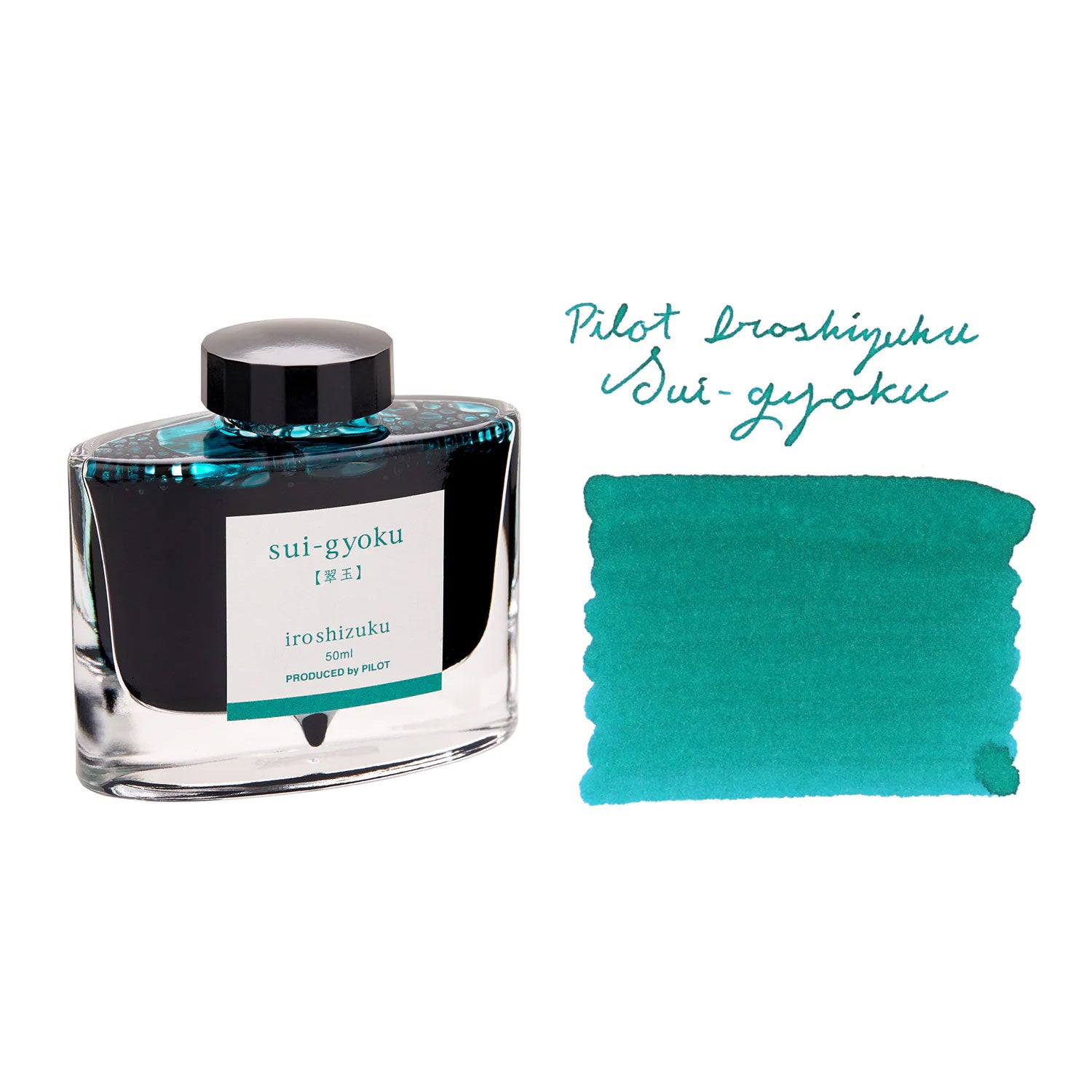
Pilot Iroshizuku — The Benchmark of Flow and Lubrication
Pilot Iroshizuku inks are consistently rated among the smoothest, best-flowing fountain pen inks in the world. Their exceptional lubrication makes the zero-pressure writing experience maximally accessible — the nib slides across paper with almost no resistance, making relaxed writing the path of least effort.
Diamine — Consistent Quality Across Every Colour
Diamine inks from Liverpool are the everyday standard for fountain pen writers worldwide — consistent flow, excellent colour saturation, and formulations that are gentle on pen internals while delivering vivid, characterful writing. For daily handwriting practice, Diamine offers outstanding quality at an accessible price.

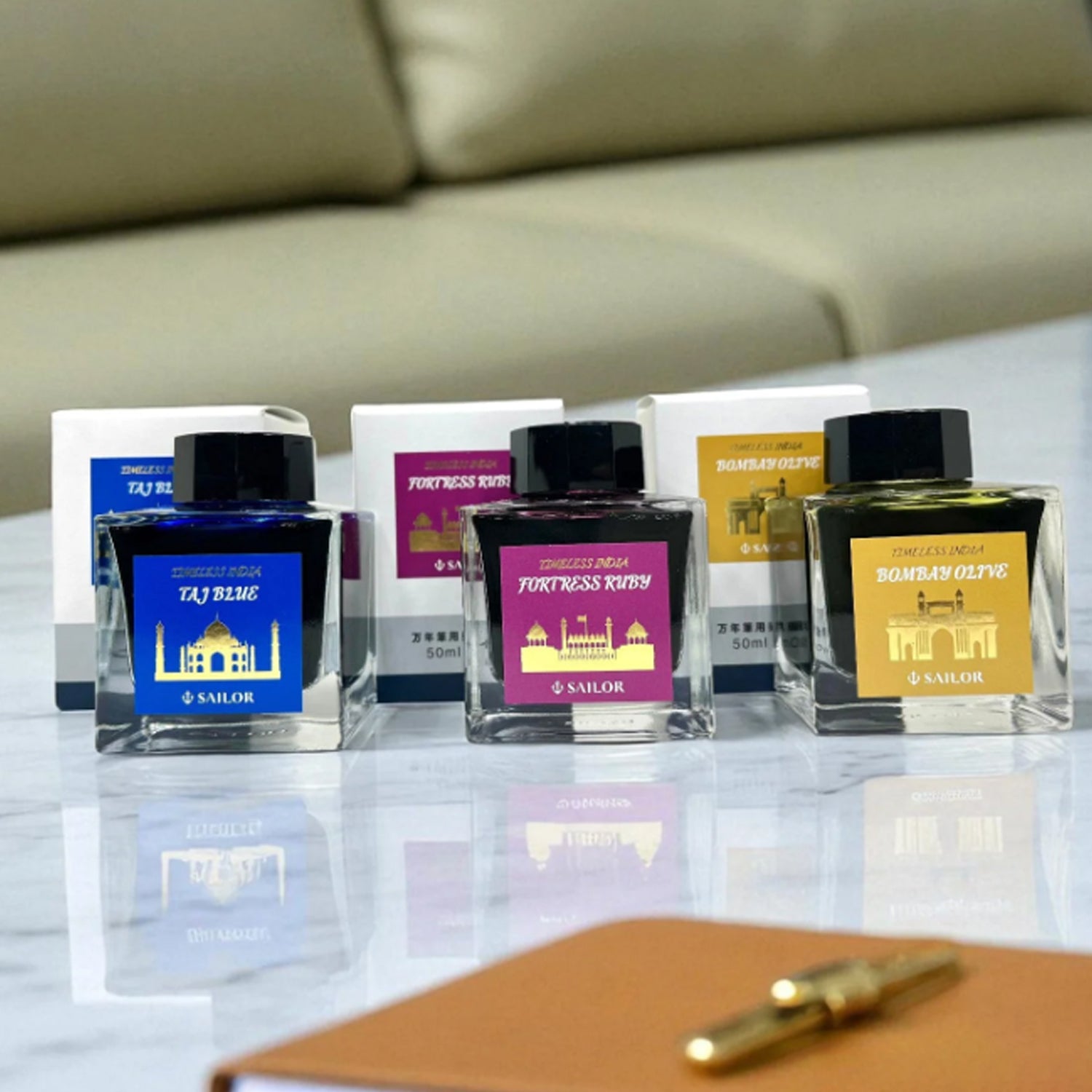
Sailor Inks — Made for Sailor Nibs, Perfect for Any Pen
Sailor's own ink range is formulated to complement their nib designs — and the result is a series of beautifully behaved inks that flow consistently, dry at an appropriate speed, and produce excellent colour definition on most paper types.
The Notebooks That Complete the Picture
Handwriting improvement requires not just the right pen and the right ink but the right paper. A fountain pen nib on poor-quality paper is like a premium tyre on a broken road — the instrument cannot perform as designed.
At Makoba, the notebook selection is chosen with fountain pen users specifically in mind.
Rhodia notebooks with their 80 GSM Clairefontaine paper provide the smoothest possible writing surface — zero feathering, zero bleed-through, and vibrant colour reproduction that makes every handwriting session deeply satisfying. Leuchtturm1917 offers the structure of numbered pages and an index for organised practice journaling. Clairefontaine notebooks provide the purest paper experience available — the surface against which all other fountain pen papers are measured.
Why Buy From Makoba
If you are serious about improving your handwriting with a fountain pen, Makoba is the only destination in India that gives you everything you need under one roof — with the expertise to guide you to exactly the right choices.
Our collection covers every segment of the fountain pen market — from the Lamy Safari that will correct your grip from day one to the Sailor 1911 and Pelikan M800 that will accompany your writing for decades. Every pen at Makoba is 100% authentic, sourced directly from brands or their authorised distributors, and supported by a team with genuine expertise and genuine passion for fine writing instruments.
Our ink collection spans the world's finest brands — Pilot Iroshizuku, Diamine, Sailor, J. Herbin, Colorverse, KWZ, Rohrer and Klingner, and many more — giving you access to formulations that will make your chosen pen perform at its absolute best.
Our notebook selection includes Rhodia, Leuchtturm1917, Clairefontaine, and other fountain pen-friendly papers that ensure your writing surface is as good as your instrument.
And our team — known across India's pen community for personal, knowledgeable, genuinely helpful service — will guide you to the right combination of pen, ink, and paper for your specific handwriting goals, your budget, and your writing style.
With over a thousand verified reviews from writers across India, Makoba's reputation is built on one thing: helping people fall in love with writing and giving them the finest tools to do it with.
The Final Word — Yes. Your Handwriting Will Improve.
The science is clear. The mechanics are understood. The practical evidence from classrooms, offices, and writing desks across India and the world is consistent and compelling.
A fountain pen will improve your handwriting. Not because it is magic. Not because it is expensive. But because it changes the physical mechanics of how you write — eliminating pressure, relaxing the grip, encouraging fluid movement, and providing continuous tactile feedback that trains your hand and your brain to produce better writing with every session.
The improvement begins within days of making the switch. It becomes visible within weeks. It becomes permanent within months. And unlike most skills that plateau quickly, handwriting with a quality fountain pen continues to improve for as long as you write — because the pen's feedback system never stops teaching.
The only question remaining is which pen to start with.
The answer to that question — whatever your budget, your writing style, or your experience level — is waiting for you at Makoba.
Pick up the pen. The improvement begins the moment you do.
Explore Makoba's complete collection of fountain pens, premium inks, and fountain pen-friendly notebooks — curated by India's most passionate and knowledgeable writing instrument specialists. Find your perfect handwriting companion today.
Explore the options with Makoba
Turn the ideas in this guide into a shortlist that suits the way you write. Our pen specialists can help you compare the options and check product details before you choose.
Ask a Makoba pen specialist · Our QC, dispatch photographs and protective packing · Visit our stores in Chennai, Delhi, Ahmedabad, Gurgaon and Bangalore


Leave a comment